Offshore Creative Workflow Best Practices for Teams
TL;DR:
- Effective offshore creative workflows combine structured synchronous overlap with asynchronous communication, reducing costs and improving productivity. Clear outcome-based roles, centralized documentation, visual feedback tools, and regular human connection are essential for success. Proper planning and team integration lead to consistent quality and seamless remote collaboration.
Offshore creative workflow best practices are defined as integrated processes that combine structured synchronous overlap with asynchronous communication to keep distributed creative teams aligned and productive. Businesses using these methods report up to 70% reduction in creative costs compared to domestic-only staffing. That number reflects more than budget savings. It signals a fundamental shift in how creative work gets done across time zones. The practices covered here address role clarity, communication rhythms, documentation, feedback systems, and team culture, giving creative leaders a complete operational framework for managing remote creative projects in 2026.
1. Offshore creative workflow best practices start with outcome-based roles
Defining roles by title alone creates confusion on offshore teams. The most effective approach defines each role by specific deliverables: how many assets per week, what formats, which tools, and what quality standard. Outcome-oriented roles increase offshore team productivity and alignment because every team member knows exactly what success looks like.
A strong offshore role definition includes:
- Deliverable volume: Three social graphics per day, two video edits per week, or one brand deck per sprint.
- Tool access: Figma, Adobe Creative Cloud, or the project management platform the team uses.
- Required skills: Specific software proficiency levels, not vague descriptors like “creative thinker.”
- Integration points: Which sprint ceremonies, Slack channels, and review stages the hire participates in.
- Escalation path: Who they contact when blocked and within what timeframe.
Vague roles create offshore hires who wait for instructions instead of driving work forward. Overhiring before the workflow is proven wastes budget and creates coordination overhead. Start with one or two well-defined roles, prove the workflow, then scale.
Pro Tip: Write the role definition as if you are onboarding a new hire on day one with no prior context. If the document cannot stand alone, it is not specific enough.

2. Balance synchronous overlap and asynchronous communication
The 4-hour daily synchronous overlap standard exists for a reason. Live time between teams is finite and expensive. Using it for status updates wastes the one window where real decisions can happen.
Industry best practice keeps 70–80% of communication asynchronous. That means most questions, updates, and feedback travel through written channels, recorded videos, or task comments rather than live meetings. The synchronous window is reserved for unblocking, decisions, and relationship building.
A practical rhythm looks like this:
- Morning async stand-up: Each offshore team member posts a written update covering what they completed, what they are working on, and any blockers.
- Overlap window (live): The team uses this time for design reviews, sprint planning, and decisions that require real-time input.
- End-of-day handoff: Offshore members post a structured summary before signing off, flagging anything that needs a response before the next overlap window.
- Async feedback cycle: Reviewers respond to work in progress using task comments or video walkthroughs during their own working hours.
Keeping the overlap window reserved for unblocking and decisions while shifting status updates and routine reports to async prevents meeting fatigue and protects the highest-value collaboration time.
Pro Tip: Block the overlap window on every team member’s calendar as a protected meeting slot. Treat it like a production deadline, not an optional check-in.
3. Build centralized documentation as a single source of truth
Without living brand hubs and centralized asset systems, offshore teams face delays and increased revision rounds. Every time a designer has to ask where the latest logo file lives, the workflow breaks. Centralized documentation eliminates that friction.
The documentation layer for an offshore creative team has four distinct components:
| Layer | Purpose | Example tools |
|---|---|---|
| Source of truth | Brand guidelines, approved assets, style systems | Notion, Confluence, Google Drive |
| Task tracker | Active assignments, owners, deadlines, status | Asana, Linear, Jira |
| Decision log | Recorded decisions with context and date | Dedicated Notion page or Slack thread |
| Handoff thread | End-of-day summaries and blocker flags | Slack channel or project management comments |
Each layer serves a different function. Mixing them creates confusion. A decision log captures why a design direction changed. A task tracker shows who owns the next step. Neither replaces the other.
Maintaining documentation discipline requires a weekly audit. Assign one team member to flag outdated files, broken links, or missing decisions each Friday. That 15-minute habit prevents months of accumulated confusion.
- Keep brand guidelines version-controlled with a clear “last updated” date.
- Record short screen-share videos for complex decisions so tone and context survive the time zone gap.
- Archive completed project folders with a brief summary so future hires can learn from past work.
4. Implement visual and asynchronous feedback systems
Text-based feedback on creative work fails consistently. Phrases like “make it pop” or “adjust the spacing” mean different things to different people. High-bandwidth feedback tools such as visual proofing and direct-to-asset annotation cut revision loops and preserve nuance that text destroys.
The most effective asynchronous feedback system for offshore creative teams uses three elements:
- Frame-specific annotation: Comment directly on the design file or video frame where the issue exists. Tools that support time-stamped or pixel-level comments eliminate the guesswork of “the button in the top right.”
- Video walkthroughs: A 90-second screen recording explaining a revision request preserves tone and context better than any written note. The reviewer’s voice communicates urgency, preference, and nuance that text cannot.
- Batched feedback rounds: Set a clear rule that feedback is delivered once per revision cycle, not in a stream of individual comments throughout the day. Batching reduces distraction and gives the designer a complete picture before starting revisions.
State-aware task management reinforces this system. When a task moves from “in review” to “revisions requested,” the designer gets a notification with all feedback attached. No chasing, no missed comments.
Pro Tip: Limit revision rounds to two by default. If a design reaches a third round, that signals a brief or role definition problem, not a designer problem. Fix the upstream issue.
5. Foster team cohesion and prevent distributed loneliness
Distributed team loneliness is a documented risk in offshore collaboration. It reduces engagement, increases attrition, and degrades the quality of creative work over time. Regular 1:1 video meetings with offshore talent are the most direct countermeasure.
Weekly or biweekly live 1:1 meetings, camera on, with no strict agenda, build the human rapport that task-based communication cannot. These are not performance reviews. They are conversations. Ask what is going well, what feels frustrating, and what the person needs to do their best work.
Beyond 1:1s, full integration into team rituals matters. Treating offshore hires as full colleagues within the same sprint ceremonies and communication channels prevents the “throw it over the wall” mentality that siloes offshore work from the core team.
Practical integration steps include:
- Include offshore creatives in sprint planning, retrospectives, and design critiques.
- Create a dedicated social channel for non-work conversation, shared across all time zones.
- Celebrate offshore team wins in the same channels and with the same visibility as local wins.
- Align on communication norms early: response time expectations, tone in written messages, and how to signal when something is urgent.
Pro Tip: Send a short personal message to each offshore team member on their work anniversary or after a strong project delivery. Recognition that costs nothing builds loyalty that is very hard to replace.
Key takeaways
Effective offshore creative collaboration requires outcome-based roles, protected synchronous overlap, centralized documentation, visual feedback systems, and consistent human connection to perform at the level of a co-located team.
| Point | Details |
|---|---|
| Define roles by deliverables | Specify asset volume, tools, and integration points to eliminate ambiguity and waiting. |
| Protect the overlap window | Reserve live time for decisions and unblocking, not status updates or routine reports. |
| Centralize documentation | Maintain a single source of truth for brand assets, decisions, and task ownership. |
| Use visual feedback tools | Frame-specific annotation and video walkthroughs reduce revision rounds and miscommunication. |
| Invest in human connection | Weekly 1:1 video meetings and full sprint integration reduce attrition and improve output quality. |
What I have learned from building offshore creative teams
The biggest mistake I see creative leaders make is treating offshore hires as a task queue rather than a team. They send briefs, receive files, and wonder why the work feels disconnected. The answer is almost always structural. The offshore team was never given the context, the access, or the relationship to produce work that feels native to the brand.
The second mistake is trying to replicate a co-located workflow across time zones. Mandatory daily video calls at 8:00 AM local time for an offshore team in India are not collaboration. They are a tax on the people doing the actual work. The 4-hour overlap standard exists because it is enough. Use it well and protect the rest of the day for deep, focused creative output.
What actually works is investing heavily in documentation and role clarity before the first hire starts. Every hour spent writing a clear brief template, a brand guideline, or a decision log saves three hours of revision and re-explanation later. Offshore creative teams scale well when the workflow is proven. They do not scale when the process is still being invented.
Measure success by output quality and delivery consistency, not by hours logged or meeting attendance. When an offshore designer delivers on time, within brief, with minimal revisions, the workflow is working. That is the only metric that matters.
— Rajkumar
How Remotee helps creative teams hire offshore with confidence
Building the workflow is only half the equation. Hiring the right people compliantly is the other half, and it is where many creative leaders lose time they cannot afford.
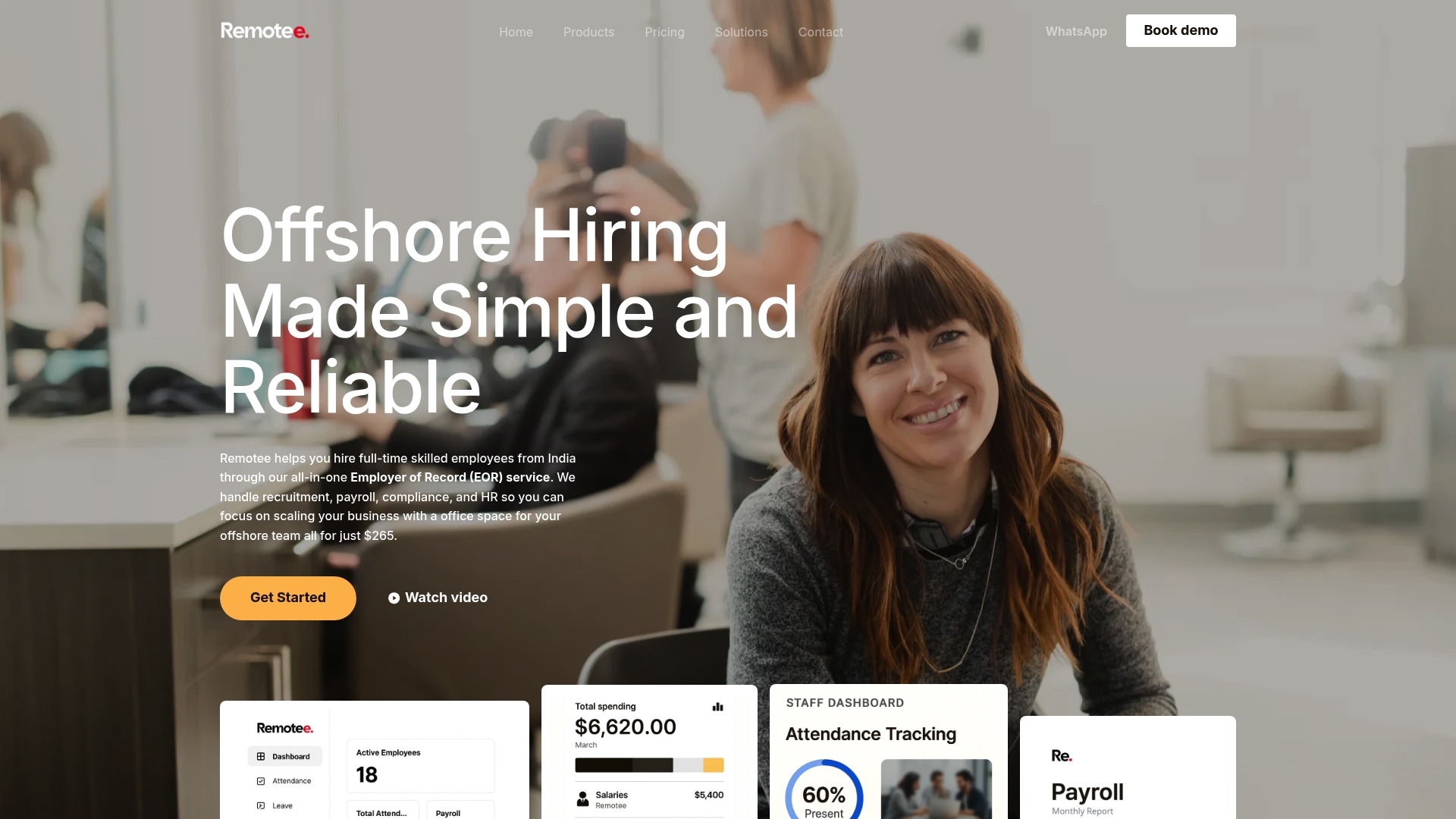
Remotee’s Employer of Record services in India handle compliance, payroll, and HR so creative team leaders can focus on the work itself. Remotee manages local labor law requirements, tax filings, and employment contracts, removing the administrative burden that slows offshore hiring. Clients report up to 32% savings on hiring costs. For creative agencies and in-house teams ready to build a proven offshore creative talent pipeline, Remotee presents a direct path from role definition to a fully onboarded hire.
FAQ
What is the recommended synchronous overlap for offshore creative teams?
Industry best practice sets a minimum of 4 hours of daily synchronous overlap. This window covers decisions, unblocking, and live reviews while the majority of communication stays asynchronous.
How do you reduce revision rounds with offshore designers?
Use frame-specific annotation tools and asynchronous video walkthroughs to deliver precise, context-rich feedback. Batch all feedback into a single round per revision cycle to give designers a complete picture before they start changes.
Why do offshore creative teams lose cohesion over time?
Distributed team loneliness develops when offshore members are excluded from sprint ceremonies, social channels, and direct manager contact. Weekly 1:1 video meetings and full integration into team rituals are the most effective countermeasures.
What documentation does an offshore creative workflow require?
Four layers cover the core needs: a source of truth for brand assets, a task tracker for active work, a decision log for recorded choices, and a handoff thread for end-of-day summaries and blocker flags.
How does outcome-based hiring improve offshore creative performance?
Defining roles by specific deliverables rather than job titles gives offshore creatives clear success criteria. This approach increases productivity, reduces ambiguity, and makes performance measurement straightforward for both sides.