How Offshore Game Designers Are Hired in 2026
TL;DR:
- Hiring offshore game designers requires a structured process involving clear hiring models, rigorous screening, and contractual safeguards to ensure quality from day one. The most effective method includes portfolio review, paid trial tasks, and establishing communication routines, while using verified hiring partners and EOR services simplifies compliance and reduces costs. Rigorous verification through paid tests and process discipline is the key to successful offshore game design hires.
Understanding how offshore game designers are hired is one of those topics where studios often discover they’ve been doing it wrong after an expensive mistake. The process is more structured than posting a job on a freelance platform and hoping for the best. It involves clear hiring models, disciplined screening, contractual safeguards, and an onboarding approach that actually integrates remote talent into your production pipeline. This guide walks you through each stage, so your next offshore hire delivers quality work from day one instead of creating headaches at week four.
Table of Contents
- Key Takeaways
- How offshore game designers are hired: models and workflows
- Screening and evaluating offshore game designers
- Challenges unique to offshore game designer hires
- Steps to start hiring offshore game designers
- My take on why trial tasks change everything
- How Remotee helps game studios hire offshore designers
- FAQ
Key Takeaways
| Point | Details |
|---|---|
| Hiring models vary significantly | Choose between direct hire, contract, and RPO models based on your project timeline and budget. |
| Screening drives hiring success | Portfolio review and paid trial tasks are the most reliable predictors of offshore designer performance. |
| IP protection is non-negotiable | NDAs and full IP transfer clauses must be in place before any design work begins. |
| Timelines differ by model | Contract roles close in 2 to 4 weeks; direct hires typically take 4 to 8 weeks to finalize. |
| Compliance matters more offshore | Using an Employer of Record removes legal and payroll risk when hiring game designers in India or other markets. |
How offshore game designers are hired: models and workflows
The offshore game design hiring process is not a single path. Studios choose from several engagement models depending on project scope, budget, and how long they need the talent.
The three main hiring models
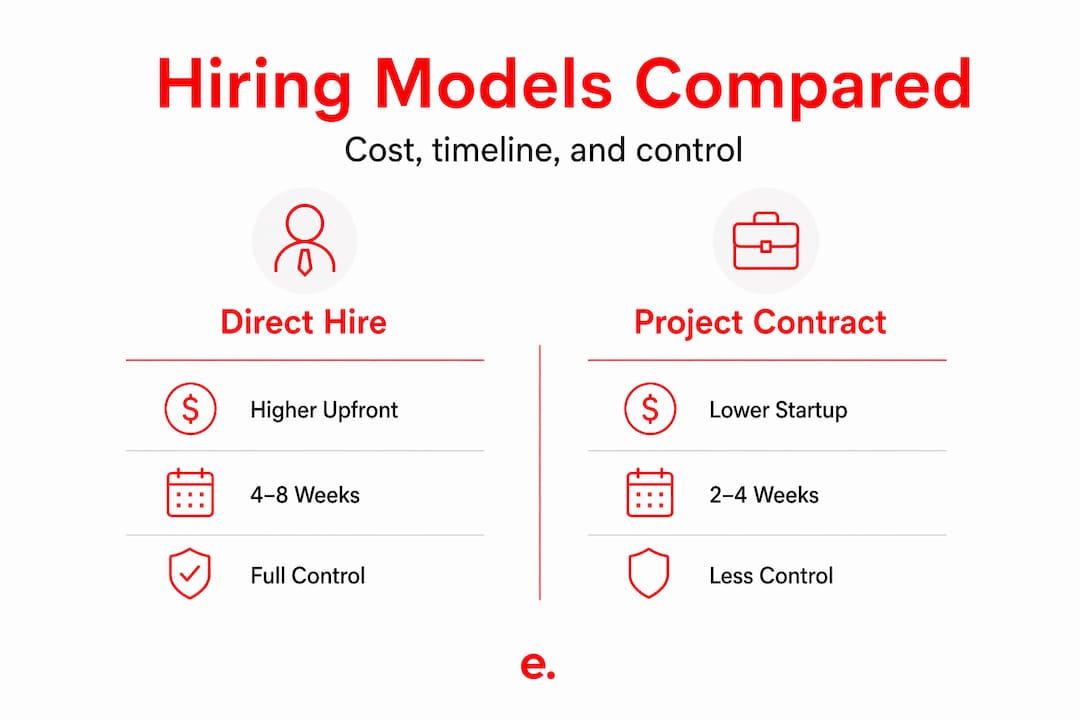
The most common model is direct hire, where a studio recruits a full-time employee based in another country. This works well for sustained production needs. Contract hires close in 2 to 4 weeks, while direct hires typically require 4 to 8 weeks, reflecting the additional compliance and onboarding work involved. The second model is contract or project-based engagement, where a designer is brought in for a specific deliverable or sprint. This is popular for art outsourcing, level design, and UI work that peaks during production crunch.
The third model is Recruitment Process Outsourcing, or RPO, where a specialized firm builds and manages the candidate pipeline on your behalf. RPO providers deliver interview-ready candidates within 7 to 10 days in some cases, covering global markets and offering flexible capacity across different projects or sprint cycles. This model suits studios that hire at volume or that lack internal HR resources to manage offshore sourcing themselves.
Comparing the models
| Model | Best for | Typical timeline | Studio control |
|---|---|---|---|
| Direct hire | Long-term, full-time roles | 4 to 8 weeks | High |
| Contract or project-based | Sprint or deliverable-specific work | 2 to 4 weeks | Medium |
| RPO or staffing agency | Volume hiring or limited internal HR | 7 to 10 days (pipeline) | Low to medium |
| Contract-to-hire | Trial before full commitment | 4 to 12 weeks | High after conversion |
Each model carries different cost profiles. Direct hires cost more upfront but reduce per-hour rates over time. Project-based contracts carry premium rates for short bursts. RPO fees are typically a percentage of placed salary or a flat retainer.
Screening and evaluating offshore game designers
Where you hire from matters far less than how rigorously you screen candidates for their specific role. This is where most studios leave money on the table, skipping validation steps that would surface obvious mismatches before any work is commissioned.
Portfolio review as the first gate
Portfolio alignment is the earliest and most critical filter for offshore game designer roles, especially for artistic disciplines like environment art, character design, and UI. Before any live interview, require candidates to submit work that matches your genre, art style, and technical pipeline. A concept artist with a stunning portfolio built on AAA realism is a poor match for a stylized mobile title, regardless of raw talent.
The screening sequence that works
A well-structured offshore screening process typically moves through these stages:
- Portfolio review: Assess style fit, technical quality, and tool proficiency (Photoshop, Substance, Figma, game engine editors) from submitted work.
- Recruiter or producer call: A 30 to 45 minute call to assess communication, availability, time zone overlap, and salary expectations.
- Paid design test or trial task: A constrained assignment, usually 1 to 2 weeks, paid at a fair rate, that mirrors real production conditions.
- Technical or discipline-specific panel: A deeper review by a senior team member who can evaluate production methodology and documentation practices.
- Final team interview: Culture and collaboration fit, production pipeline familiarity, and feedback receptiveness.
This sequence mirrors what studios like Larian Studios and HoYoverse use for offshore and international hires, and it exists for good reason. Skipping the paid test is where most failed offshore engagements begin.
Pro Tip: Structure your paid design test around a real problem your studio has already solved internally. This gives you a direct quality benchmark and reveals how the candidate thinks through production constraints, not just whether they can make something look good.
Challenges unique to offshore game designer hires
Hiring game designers abroad introduces a set of challenges that domestic hiring simply does not. Recognizing them before you start is what separates studios that build productive offshore relationships from those that spend months recovering from bad hires.
IP protection comes first
NDAs and full IP transfer clauses must be signed before any design work begins. This means every concept sketch, system document, and prototype asset produced under the contract belongs to your studio. Offshore designers should be explicitly prohibited from reusing, repurposing, or displaying client work without written permission. Do not treat this as a formality. For offshore engagements, IP documentation is your primary legal defense if a dispute arises across jurisdictions.
Communication and time zone alignment
This is the most commonly cited reason offshore designer relationships fail, and yet it is one of the most preventable problems. Daily or weekly reporting cadences with defined communication tools (Slack, Notion, Jira) reduce the ambiguity that causes offshore teams to produce work that misses the brief. Studios hiring from India, Eastern Europe, or Southeast Asia should identify a minimum two-hour overlap window each working day for real-time check-ins.
Here are the most common offshore hiring pitfalls and how to avoid them:
- Vague briefs with no reference material result in off-style deliverables. Always provide annotated examples.
- No milestone check-ins means problems surface only at final delivery. Build review gates into every phase.
- Skipping communication tests during screening leads to misaligned expectations mid-production.
- Delayed IP paperwork creates ownership disputes after valuable work is already complete.
Pro Tip: Before committing to a full contract, assign a small, scoped integration task that requires the offshore designer to work inside your actual pipeline tools. This tests both skill and process compatibility at the same time.
Steps to start hiring offshore game designers
If you are ready to move from consideration to execution, follow this sequence to minimize risk and accelerate quality outcomes.
-
Define the role with precision. Write a design brief that specifies the discipline (environment art, UX, level design), the tools required, the art style or design system, and the expected output format. Generic job descriptions attract generic candidates.
-
Choose your hiring model. Decide whether you need a direct hire for sustained work, a contractor for a defined sprint, or an RPO partner to build your pipeline. Your decision should account for how quickly you need talent and whether your internal HR team can manage offshore compliance.
-
Select a verified offshore hiring partner or platform. Using a provider that embeds technical validation before candidate presentation dramatically improves shortlist quality. Outsourcing only the sourcing without screening leads to wasted interviews and poor outcomes. Look for providers that perform role-specific technical screens before presenting any candidate.
-
Set hiring gates with clear acceptance criteria. Define what passes and what fails at each stage before screening begins. This removes subjectivity, speeds up decisions, and protects you from rushed hires.
-
Run the paid trial task. This is non-negotiable. Structured hiring workflows that include trial tasks and defined acceptance criteria consistently reduce failed engagements. Pay fairly for this work.
-
Onboard into your actual tools. From day one, the offshore designer should have access to your version control system, communication channels, project management tools, and style guides. A slow or incomplete onboarding kills early momentum.
-
Establish a reporting cadence. Weekly progress reports, async daily updates, and scheduled milestone reviews keep offshore designers aligned without micromanaging. Define who owns feedback and what the turnaround time is for approvals.
You can find a more detailed offshore staffing risk checklist to supplement these steps with compliance and contract safeguards specific to 2026.
My take on why trial tasks change everything
I’ve spent years watching studios make the same mistake with offshore designer hiring. They shortlist based on portfolio, have one good call, and then extend a three-month contract based on that alone. A month later, they’re drowning in revision cycles and second-guessing the whole offshore model.
In my experience, the single biggest predictor of a successful offshore relationship is whether the studio ran a real, paid trial task before committing. Not a spec request. Not an unpaid “test.” A scoped, compensated task that mirrors production conditions. What I’ve learned is that this step does two things most studios don’t anticipate. It validates the designer’s skills under actual constraints, and it reveals how that person communicates when they’re stuck, how they interpret feedback, and whether their documentation matches your production standards.
I’ve also seen studios go too fast in the other direction, running offshore designers through six interview rounds that take two months and burn candidate goodwill. Speed matters. A well-designed process should get you to a hire decision in three to five weeks for contract roles. That means moving quickly on portfolio reviews and not letting trial tasks sit unreviewed for two weeks.
My honest take: where a designer is located is almost never the problem. The problem is almost always a process that skipped verification. Rigorous screening transfers directly to quality output. Build the process once, run it every time, and offshore hiring stops feeling like a gamble.
— Rajkumar
How Remotee helps game studios hire offshore designers
Game studios looking to hire creative talent from India without managing compliance, payroll, and HR overhead now have a faster path.
Remotee’s Employer of Record service handles every operational detail of offshore hiring, including local labor law compliance, IP-safe contracts, and payroll processing, so your studio focuses on building great games instead of managing offshore administration. Studios using Remotee report up to 32% savings on hiring costs compared to local equivalents. The EOR service for India makes it straightforward to bring on full-time offshore game designers with proper employment contracts and IP protection built in. Whether you’re hiring a single UI designer or scaling a dedicated art team, Remotee’s vetting process surfaces only top-tier candidates who meet your technical and creative criteria.
FAQ
How long does the offshore game designer hiring process take?
Contract roles typically close in 2 to 4 weeks, while direct hires take 4 to 8 weeks. RPO providers can deliver interview-ready candidates within 7 to 10 days when pipelines are pre-built.
What hiring model is best for outsourcing game design jobs?
For short-term or sprint work, project-based contracts work best. For ongoing production needs, direct hire or contract-to-hire gives studios more control and better IP protection.
How do you protect IP when hiring game designers abroad?
Require a signed NDA and a full IP transfer agreement before any work begins. The contract should explicitly prohibit designers from reusing or displaying client materials without written permission.
What questions should you ask offshore designers during screening?
Ask about their production tool proficiency, how they handle feedback cycles, their availability for real-time overlap, and request examples of work produced within a constrained style guide or technical pipeline.
What is the cost of hiring offshore game designers?
Costs vary by region, model, and seniority. India-based designers typically offer 40 to 60% cost savings compared to North American equivalents, with further reductions when using an EOR service that consolidates compliance and HR overhead.