The Role of Technology in Offshore Staffing in 2026
TL;DR:
- Technology has shifted offshore staffing from focusing on cost reduction to enhancing capabilities through AI-augmented workflows. Implementing strategic workflows, senior talent, and centralized governance enables offshore teams to deliver significantly higher productivity and faster hiring cycles. Success depends on measuring output and integrating technology into human workflows, transforming offshore staffing into a strategic advantage.
Most business leaders still think of offshore staffing as a cost play. Hire cheaper, deliver the same output, pocket the margin. But the role of technology in offshore staffing has fundamentally changed that equation. By the end of 2026, 40% of enterprise applications will integrate task-specific AI agents, up from less than 5% in 2025. That is not a gradual shift. That is a structural transformation in how offshore teams operate, how talent is selected, and how output is measured. If you are still evaluating offshore staffing on headcount and hourly rates alone, this guide will change how you think about it.
Table of Contents
- Key Takeaways
- The role of technology in offshore staffing today
- Strategic integration: beyond lift-and-shift
- Challenges you need to plan for
- Practical implementation for business leaders
- My take on future-proofing your offshore strategy
- How Remotee helps you build a technology-ready offshore team
- FAQ
Key Takeaways
| Point | Details |
|---|---|
| AI is reshaping offshore output | AI-augmented workflows deliver 40–70% productivity gains, letting smaller teams do more without adding headcount. |
| Transform before you shift | Moving broken processes offshore amplifies problems; optimize workflows with technology first, then offshore. |
| Senior talent now leads AI | Offshore strategies should prioritize experienced workers who can orchestrate AI agents, not just execute tasks. |
| Governance determines AI success | Over 40% of agentic AI projects risk cancellation without centralized oversight and clear performance benchmarks. |
| Speed of hiring has changed | Pre-vetted, tech-enabled staffing models can reduce hiring cycles from 90 days to under 5 business days. |
The role of technology in offshore staffing today
The old model was straightforward. You identified repetitive, well-defined tasks, moved them to a lower-cost geography, and monitored output through weekly reports. It worked well enough when the tasks were stable and the tooling was basic. That model is now obsolete.
Today, the technology benefits in offshore work go far beyond communication tools and shared project boards. The real shift is happening at the workflow level. AI-augmented engineering workflows are delivering 40–70% productivity improvements on routine coding tasks, which means a five-person offshore team equipped with the right AI tooling can now perform at the capacity of a team twice that size. That changes the math on cost, team structure, and what you actually need to hire for.
Here is what that looks like in practice across core technology categories:
- AI coding assistants and agent frameworks: Tools like GitHub Copilot and agentic development environments allow offshore engineers to generate, test, and iterate on code at speeds that were impossible two years ago. The bottleneck shifts from execution to review and orchestration.
- Cloud-based collaboration platforms: Shared environments in tools like Jira, Confluence, Notion, and Linear eliminate the information silos that used to make offshore coordination painful. Everyone works from the same source of truth, regardless of time zone.
- Automated compliance and payroll systems: For companies hiring through an Employer of Record model, technology now handles tax filings, contract generation, and regulatory compliance automatically. The administrative burden that once made offshore hiring feel risky has largely been removed.
- Asynchronous communication infrastructure: Loom, Slack, and structured documentation practices have replaced the dependency on real-time meetings. Offshore teams can now operate with full context without requiring overlapping hours.
| Technology Category | Primary Impact | Measurable Outcome |
|---|---|---|
| AI coding assistants | Accelerates development cycles | 40–70% productivity gain on routine tasks |
| Cloud collaboration tools | Reduces coordination friction | Faster feedback loops, fewer rework cycles |
| Automated compliance systems | Removes administrative risk | Faster onboarding, lower legal exposure |
| Asynchronous communication tools | Reduces time-zone dependency | Higher team autonomy and output consistency |
Pro Tip: When evaluating digital tools for remote teams, prioritize tools your offshore team already uses or can adopt without a steep learning curve. Forcing a new tool stack on an offshore team adds coordination overhead that erases the efficiency gains you are trying to create.
Strategic integration: beyond lift-and-shift
Most offshore failures share a common root cause. A company takes a process that is already inefficient, moves it offshore to save money, and then wonders why the problems got worse. More than 60% of enterprises are now moving beyond cost-arbitrage to agile, integrated offshore capability models. The ones doing it right follow a different sequence.
Here is the framework that separates successful offshore technology integration from the expensive kind:
- Audit the workflow before offshoring it. Map every step, identify where delays and errors occur, and determine which parts can be automated. If a process requires five manual handoffs, fix that before you move it offshore.
- Select technology that enables governance, not just communication. Unified platforms that track output, flag blockers, and provide visibility into team capacity give you operational control without micromanagement.
- Match talent to the technology stack. AI agent orchestration requires engineers skilled in prompt engineering, DevOps automation, and AI-assisted development. Hiring for these capabilities is a specialized process, not a standard job posting exercise.
- Integrate offshore teams as extensions of your core organization. Treating offshore staff as isolated units creates cultural barriers that erode retention and output quality over time. Shared rituals, shared tools, and shared accountability structures fix this.
- Redefine HR’s role in the process. 56% of HR leaders plan to increase permanent headcount while simultaneously managing AI integration, which means HR is no longer just hiring. HR is now designing the human-plus-AI workflow architecture.
“Successful offshore staffing focuses on outcomes such as innovation velocity and time-to-market acceleration instead of just cost savings or headcount.” — Offshoring strategy framework
Pro Tip: Before selecting an offshore staffing partner, ask specifically how they screen for AI-workflow readiness. A candidate who can write clean code is not the same as a candidate who can orchestrate AI agents within a production pipeline. These are different skill sets.
Challenges you need to plan for
The impact of technology on staffing is real, but it is not frictionless. There are specific failure modes that business leaders and HR managers consistently underestimate, and they tend to show up after the contract is signed.
The first is hidden coordination cost. Lift-and-shift offshore models create coordination overhead that compounds over time. Every unclear requirement, every undocumented process, and every misaligned expectation generates rework. Technology reduces this, but only if the processes feeding into the offshore team are already clean.
The second is the AI readiness gap. AI substitutes entry-level tasks but augments experienced workers, which means the offshore talent market is bifurcating. Junior roles are shrinking in value. Senior roles capable of directing AI workflows are in high demand and short supply. If your offshore staffing strategy still targets entry-level talent for cost reasons, you are optimizing for a model that is rapidly losing relevance.
The third is governance failure. Over 40% of agentic AI projects may be canceled by 2027 due to unclear value or hidden costs. This is not a technology problem. It is a measurement problem. Companies that treat AI integration as a feature toggle rather than a managed capability program consistently fail to capture the value they expected.
- Conduct AI-workflow readiness screening during talent selection, not after onboarding.
- Set outcome-based benchmarks before deployment, not after the first quarterly review.
- Assign a dedicated integration owner on your side who is responsible for the human-AI workflow design, not just the vendor relationship.
- Budget for knowledge transfer explicitly. The time required to bring an offshore team up to speed on your systems, culture, and expectations is real cost that most project budgets ignore.
AI adoption also mandates rethinking traditional career progression, especially entry-level roles that AI can substitute. This affects how you structure offshore teams and what training investment you need to make from day one.
Practical implementation for business leaders
The gap between knowing that technology improves offshore staffing and actually capturing those improvements comes down to execution. Here is where the concrete decisions get made.

Hiring speed as a competitive advantage
The traditional offshore hiring cycle runs 45 to 90 days from job posting to productive contribution. Concierge-style offshore staffing where partners pre-vet talent reduces that to under 5 business days. For companies moving fast on product development or scaling a function quickly, that difference is not incremental. It is the difference between hitting a launch window and missing it.
IT staff augmentation companies that maintain pre-screened AI-augmented engineers enable integration with client teams within 7 to 10 business days versus traditional 60 to 90 day hiring. The technology enabling this is not magic. It is structured talent databases, automated skills assessment pipelines, and standardized onboarding playbooks built on top of cloud platforms.
Measuring what actually matters
| Metric Type | Traditional Approach | Technology-Enabled Approach |
|---|---|---|
| Performance measurement | Hours logged, tasks completed | Output quality, cycle time, innovation velocity |
| Team sizing | Headcount targets | Capability coverage across workflow stages |
| Cost analysis | Hourly rate comparison | Total cost including coordination and rework |
| Hiring success | Time-to-fill | Time-to-productivity |
Shifting from headcount metrics to capability metrics requires your HR team to develop hybrid skills combining data-informed decisions and AI literacy. This is not optional. It is the core competency that separates HR teams that succeed with offshore technology integration from those that manage it reactively.
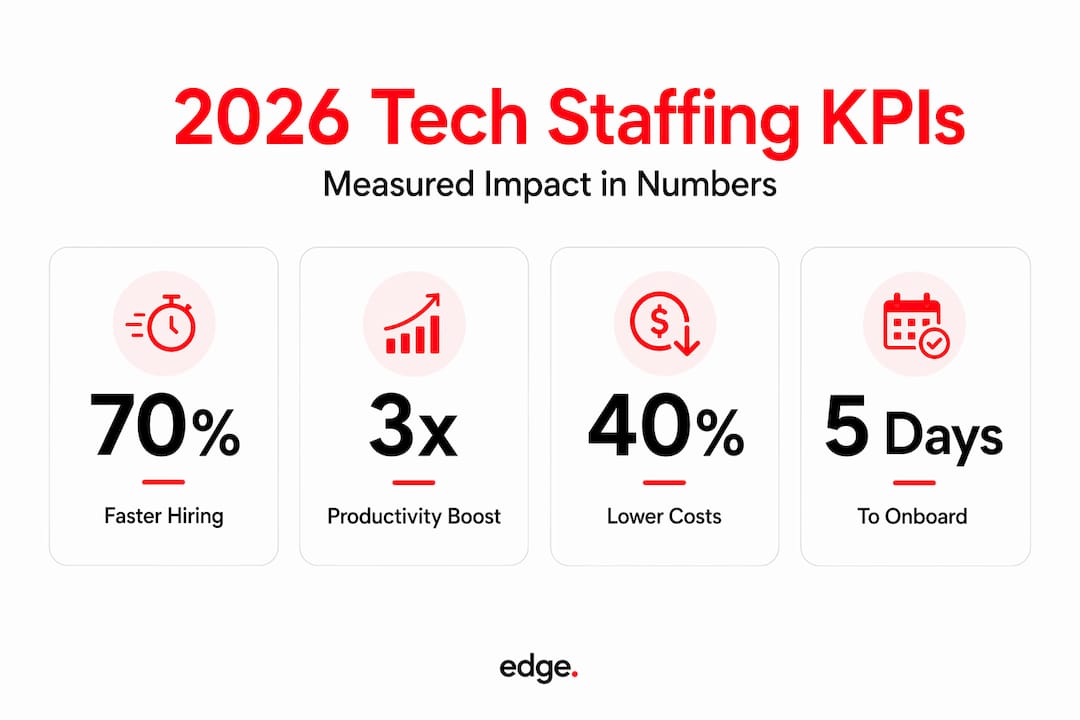
Pro Tip: Build your offshore team’s performance dashboard around time-to-productivity and output quality metrics from week one. Teams that start with the right measurement framework adapt faster and surface problems earlier than teams that start with headcount tracking and switch later.
My take on future-proofing your offshore strategy
I have watched companies spend significant resources on offshore staffing programs that delivered mediocre results not because the talent was poor, but because the model was wrong. The technology was there. The people were capable. The framework was broken.
What I have learned is that the shift from headcount to capability mindset is harder than it sounds. Most organizations say they want outcomes, but their internal processes still reward bodies in seats. You cannot build a technology-enabled offshore strategy on top of a headcount culture. The two are incompatible.
My honest recommendation: prioritize senior talent who can orchestrate AI agents over junior talent who executes tasks. The cost difference is real, but the output difference is larger. A three-person team of senior engineers with strong AI tooling will consistently outperform a ten-person team of junior developers working manually. I have seen this play out repeatedly, and the data on AI exposure raising wages for experienced workers confirms what I have observed directly.
The companies getting this right are treating their offshore staffing solutions as a capability program, not a cost reduction exercise. They have centralized governance, clear benchmarks, and HR leaders who understand both the technology and the talent. That combination is rare. It is also the only one that works at scale.
— Rajkumar
How Remotee helps you build a technology-ready offshore team
If the frameworks above resonate but the execution feels complex, that is exactly the problem Remotee is built to solve.
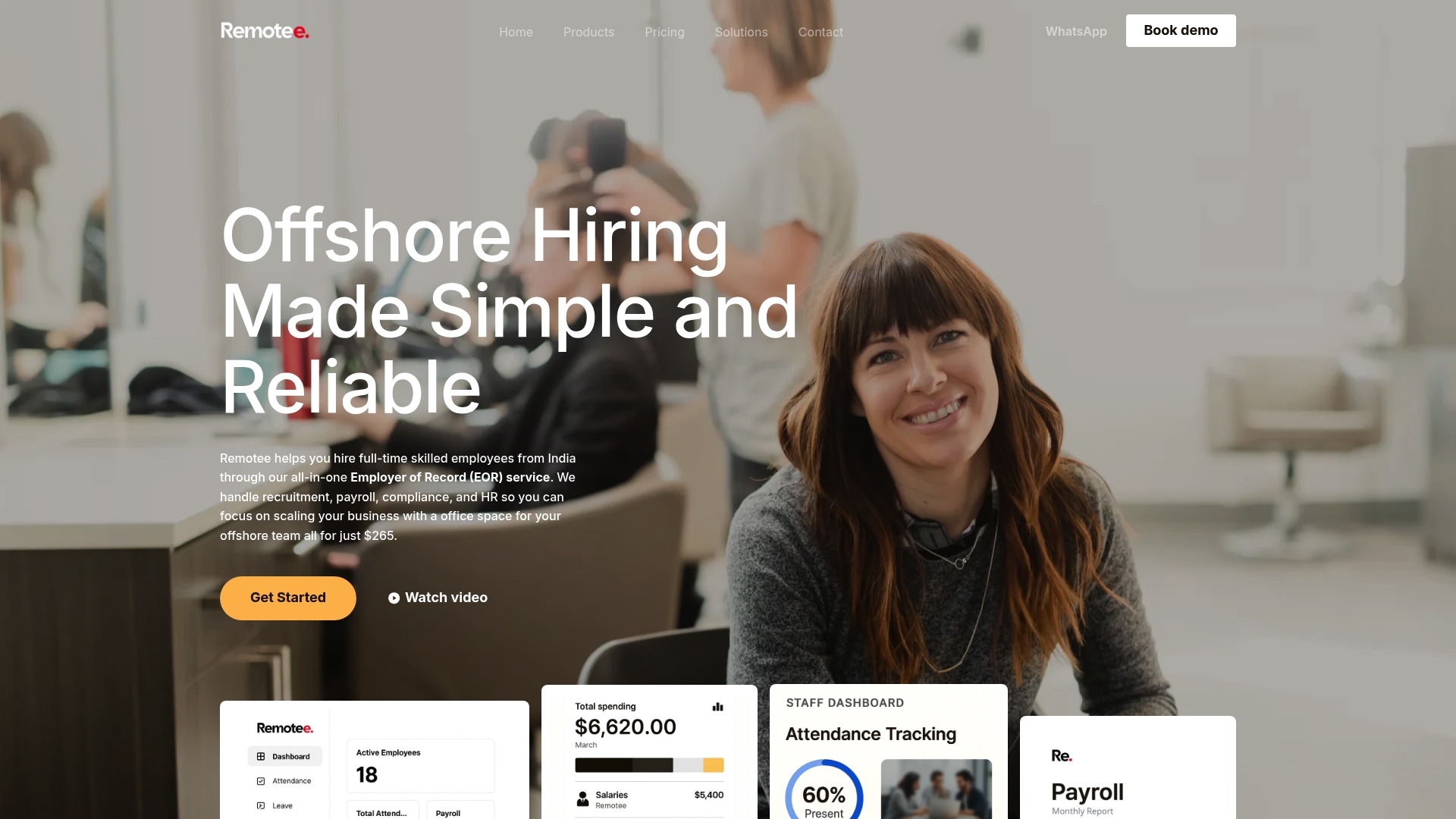
Remotee specializes in placing full-time employees from India through an Employer of Record model that handles compliance, payroll, and HR administration automatically. The talent pool is pre-screened for both technical capability and AI-workflow readiness, which means you are not starting from scratch when you need engineers who can operate in modern agentic environments. Clients consistently report up to 32% savings on hiring costs, and the engagement model is flexible enough to scale with your business rather than locking you into fixed headcount commitments. If you are ready to move from offshore staffing as a cost play to offshore staffing as a capability advantage, Remotee is the right place to start.
FAQ
What is the role of technology in offshore staffing?
Technology transforms offshore staffing from a headcount model to a capability model by enabling AI-augmented workflows, automated compliance, and cloud-based collaboration. The result is higher output from smaller, more skilled teams with lower coordination overhead.
How does AI affect offshore staffing strategies?
AI substitutes entry-level tasks and amplifies the output of experienced workers, so offshore staffing strategies now prioritize senior talent capable of directing AI agents rather than executing repetitive tasks manually.
What are the biggest risks in technology-enabled offshore staffing?
The biggest risks are governance failure, hidden coordination costs, and AI-readiness gaps in the talent pool. Over 40% of agentic AI projects risk cancellation without centralized oversight and clear performance benchmarks.
How fast can technology-enabled offshore hiring move?
Pre-vetted, technology-enabled staffing models can reduce hiring cycles from 45 to 90 days down to under 5 business days, with full team integration achievable within 7 to 10 business days for pre-screened talent pools.
What metrics should HR managers use to evaluate offshore team performance?
Shift from hours-logged and headcount metrics to output quality, cycle time, and time-to-productivity. These outcome-based measures reflect actual business value and surface problems faster than traditional tracking methods.