The Role of Cultural Fit in Offshore Hiring: 2026 Guide
TL;DR:
- Cultural fit in offshore hiring involves aligning candidates’ values, behaviors, and communication styles with organizational norms. Proper assessment through observable behaviors and structured onboarding improves team cohesion and reduces turnover. Ongoing cultural management ensures long-term offshore team performance and retention.
Cultural fit in offshore hiring is defined as the alignment between a candidate’s values, communication norms, and work habits with those of the hiring organization. Without this alignment, even technically skilled offshore engineers create friction that slows delivery, damages morale, and drives turnover. 85% of companies report communication as their primary cultural challenge in offshore team integration. That number signals a systemic problem, not a one-off hiring mistake. The role of cultural fit in offshore hiring goes far beyond personality matching. It determines whether a remote team functions as a unit or operates as disconnected contractors.

What does cultural fit mean in offshore hiring?
Cultural fit is frequently misunderstood as “hiring people who are similar.” That interpretation is both inaccurate and legally risky. The correct definition is value alignment: the degree to which a candidate’s observable behaviors, work ethics, and communication patterns match the organization’s operating norms.
The industry is shifting from “cultural fit” to “cultural add.” A cultural add hire shares core values but brings a different perspective, background, or approach. This distinction matters because value alignment reduces bias while improving team diversity and performance. Hiring for sameness produces echo chambers. Hiring for shared values plus diverse experience produces better outcomes.
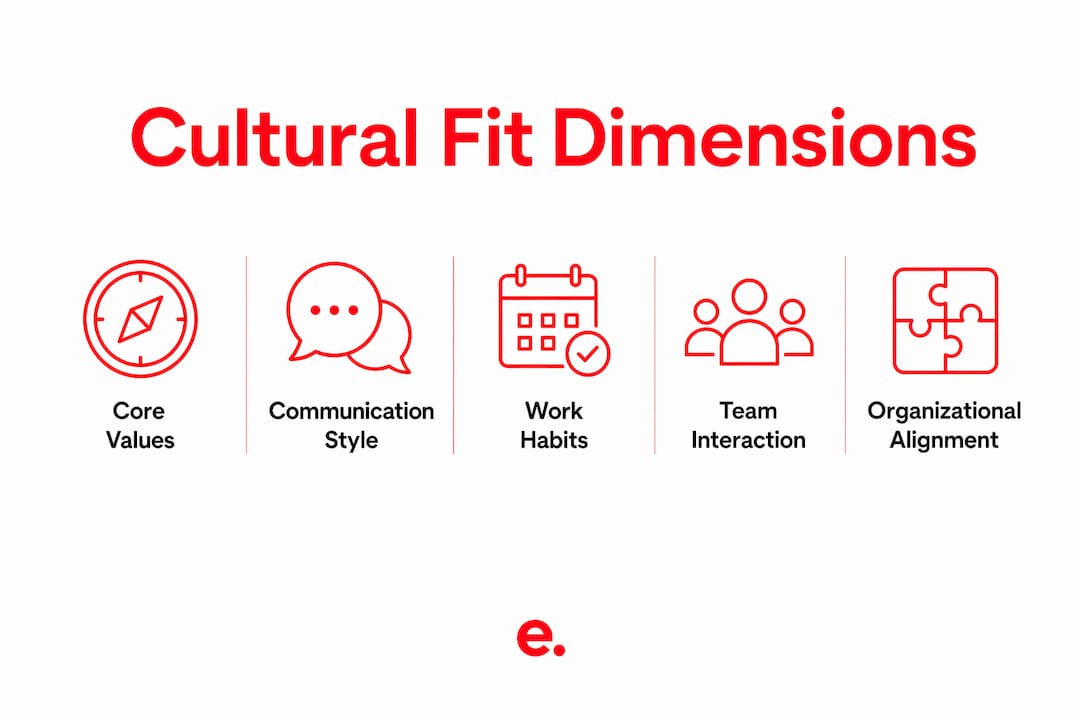
For offshore tech teams specifically, cultural compatibility operates across five measurable dimensions:
- English communication proficiency: Can the candidate write clearly in async formats like Slack, Jira, and pull request comments?
- Async work habits: Does the candidate manage tasks independently without waiting for real-time direction?
- Feedback comfort: Can the candidate give and receive direct, constructive feedback without defensiveness?
- Initiative: Does the candidate flag blockers proactively or wait to be asked?
- Familiarity with dev practices: Does the candidate understand Agile ceremonies, sprint planning, and code review norms common in US-based teams?
These five dimensions of cultural fit give HR professionals concrete, job-relevant criteria to evaluate. They replace vague gut-feel assessments with observable evidence.
Pro Tip: Replace the interview question “Do you work well in a team?” with “Describe a time you disagreed with a code review comment. What did you do?” The second question reveals feedback comfort and initiative simultaneously.
What are the biggest cultural challenges in offshore team integration?
Communication barriers are the leading cause of offshore team failure. 85% of companies identify communication as their top cultural challenge. This is not simply about language fluency. It reflects deeper differences in how cultures approach directness, hierarchy, and conflict.
In many APAC cultures, for example, junior engineers avoid contradicting senior colleagues even when they spot a technical error. In Western tech teams, raising concerns early is expected and valued. When these norms collide without explicit protocols in place, critical bugs go unreported and deadlines slip. Neither team is wrong. They are operating from different defaults.
“The biggest offshore integration failures I’ve seen don’t come from skill gaps. They come from unspoken assumptions about how work gets communicated. One team assumes silence means agreement. The other assumes silence means the task is done.”
Additional cultural challenges that affect offshore hiring practices include:
- Feedback style mismatches: Indirect feedback norms in some cultures conflict with the blunt PR comment culture in US tech teams.
- Hierarchy expectations: Some offshore engineers wait for explicit instruction rather than taking ownership of ambiguous tasks.
- Time zone communication gaps: Async communication requires a level of written clarity that many teams never develop for in-office work.
- Meeting participation norms: Engineers from cultures that prize deference may stay silent in sprint retrospectives, leaving problems unaddressed.
Remote and hybrid work requires stronger cultural alignment validated across job fit, team fit, and organization fit. The absence of physical proximity removes the informal cues that help onsite teams self-correct. Offshore teams need explicit cultural infrastructure to compensate.
How can HR professionals assess cultural fit during offshore hiring?
The cost of a bad offshore hire reaches 1.5 to 2 times the annual salary. That financial exposure makes cultural screening a business necessity, not an optional add-on to technical vetting.
Effective cultural fit assessment follows a structured, legally defensible process. Here is a practical framework for HR professionals conducting offshore recruitment:
-
Define observable criteria before the interview. Write down the specific behaviors that reflect your team’s values. “Communicates proactively” becomes “sends a written blocker update within two hours of identifying an issue.” Concrete definitions prevent subjective scoring.
-
Build a behavioral interview scorecard. Score candidates on each of the five cultural dimensions using a 1–4 scale. Require interviewers to note the specific evidence behind each score. Undocumented scores are legally indefensible and practically useless.
-
Test async communication directly. Send candidates a written brief with a deliberately ambiguous requirement. Evaluate whether they ask clarifying questions, make reasonable assumptions and document them, or simply proceed without comment. The response reveals async habits and initiative simultaneously.
-
Assess Agile familiarity with a scenario question. Ask candidates to describe how they handle a sprint where requirements change mid-cycle. Look for comfort with iteration, not frustration with ambiguity.
-
Include a structured work sample. A short take-home task with a code review component tests both technical skill and feedback comfort. Observe how the candidate responds to comments on their submission.
-
Document every decision with evidence. Record which behaviors were observed and which were absent. This protects against bias claims and creates a consistent standard across all offshore hiring decisions.
Pro Tip: Add a “cultural red flag” column to your scorecard. If a candidate cannot describe a time they pushed back on a decision, that absence of evidence is itself a data point worth recording.
The offshore developer vetting process should treat cultural assessment as equal in weight to technical screening. Skipping it to speed up hiring is the most expensive shortcut in offshore recruitment.
What are best practices for onboarding offshore hires to build cultural cohesion?
Structured onboarding reduces time to productivity by approximately 40% for offshore teams. That figure represents weeks of recovered output per hire. The mechanism is straightforward: when offshore engineers understand the team’s communication norms, tooling standards, and feedback culture from day one, they spend less time guessing and more time contributing.
Effective offshore onboarding includes cultural integration workshops alongside technical setup. These workshops cover how the team gives feedback, how blockers get escalated, and what “done” means in the context of your sprint process. Both onshore and offshore team members attend. This is not a one-way orientation. It is a mutual calibration.
Two structural choices define whether offshore onboarding succeeds or fails:
| Approach | Outcome |
|---|---|
| Cross-functional sprint teams with shared ownership | Offshore engineers participate in planning, retrospectives, and decisions. Integration accelerates. |
| Separated onshore/offshore workflows (“throw it over the wall”) | Offshore team becomes an execution layer. Cultural distance grows. Retention drops. |
The cross-functional model requires deliberate setup but pays off in cohesion and velocity. The separated model feels easier to manage initially and consistently underperforms over time.
Practical onboarding steps that directly improve remote team cultural cohesion:
- Standardize PR comment conventions using tags like
[BLOCKER],[QUESTION], and[SUGGESTION]so offshore engineers know exactly how to interpret and respond to code review feedback. - Set up DevContainer environments so offshore engineers can start contributing on day one without environment configuration delays.
- Schedule a weekly async check-in where offshore team members share blockers in writing before the synchronous standup.
- Assign an onshore buddy for the first 60 days. This person answers cultural questions that offshore engineers may hesitate to raise in a group setting.
Pro Tip: Run a “communication norms” document review in week one. Ask the offshore hire to read your team’s Slack etiquette guide and PR comment conventions, then ask them to summarize the three most surprising norms. Their answer tells you exactly where cultural calibration is needed.
How does cultural fit affect long-term offshore team performance and retention?
Companies in the top quartile for ethnic and cultural diversity are 36% more likely to achieve above-average profitability. This finding reframes the cultural fit conversation entirely. Cultural alignment done correctly, meaning value alignment plus diversity, does not trade performance for inclusion. It produces both.
Cultural compatibility in teams drives job satisfaction and engagement over the long term. Engineers who share the team’s values around ownership, transparency, and quality stay longer and contribute more. Those who feel culturally isolated disengage quietly before they resign visibly.
Long-term retention requires ongoing cultural alignment, not just a strong onboarding week. Practical HR processes that sustain cultural cohesion post-hire include:
- Quarterly values check-ins: Ask offshore team members to rate how well the team’s actual behavior matches its stated values. Gaps reveal cultural drift before it becomes a retention problem.
- Promotion transparency: Offshore engineers who see a clear path to senior roles stay. Those who feel capped by geography leave.
- Feedback loop formalization: Regular retrospectives where offshore voices carry equal weight signal that cultural integration is genuine, not performative.
- Recognition parity: Public acknowledgment of offshore contributions in the same channels used for onshore teams prevents the “invisible team” dynamic that erodes morale.
The offshore staff retention strategies that work long-term all share one characteristic: they treat cultural alignment as an ongoing management responsibility, not a one-time hiring filter.
Key Takeaways
Cultural fit in offshore hiring succeeds when HR professionals replace subjective gut-feel with observable, value-based criteria applied consistently from screening through long-term retention.
| Point | Details |
|---|---|
| Define cultural fit as value alignment | Assess observable behaviors, not personality similarity, to reduce bias and improve team diversity. |
| Communication is the top challenge | 85% of companies cite communication barriers as their primary offshore integration obstacle. |
| Structured onboarding cuts ramp time | Offshore teams with structured onboarding reach full productivity approximately 40% faster. |
| Bad hires carry a steep financial cost | A failed offshore hire costs 1.5 to 2 times the annual salary, making cultural screening financially critical. |
| Diversity and alignment drive profitability | Companies in the top quartile for cultural diversity are 36% more likely to achieve above-average profitability. |
Why I stopped trusting “culture fit” as a hiring signal
I have reviewed hundreds of offshore hiring decisions across tech companies, and the phrase “not a culture fit” is the most misused rejection reason in the industry. It almost always means one of two things: the interviewer felt uncomfortable, or the candidate communicated differently than expected. Neither is a legitimate basis for rejection.
The shift I recommend is concrete. Stop asking whether a candidate “fits.” Start asking whether they share the specific values your team actually operates by, not the values listed on your careers page. Those are often different. An engineer who asks clarifying questions before starting a task, documents their assumptions, and flags blockers in writing is demonstrating cultural alignment with a high-performing async team. An engineer who waits for detailed instructions and avoids disagreement in code reviews is not.
The other mistake I see repeatedly is treating cultural assessment as a one-time hiring filter. Cultural alignment requires ongoing investment. Teams drift. Norms evolve. Offshore engineers who were well-aligned at hire can become culturally isolated within 18 months if HR stops paying attention. The companies that retain their best offshore talent treat cultural cohesion as a management discipline, not a recruitment checkbox.
The role of HR in offshore hiring is to build and maintain that discipline. That means defining measurable criteria, training interviewers, structuring onboarding, and running retention processes that keep cultural alignment alive after the offer letter is signed.
— Rajkumar
How Remotee builds cultural alignment into offshore hiring
Tech companies that treat cultural fit as an afterthought pay for it in turnover, lost velocity, and failed offshore engagements. Remotee takes a different approach.
Remotee’s offshore hiring service includes cultural vetting as a core part of the candidate screening process, not an optional add-on. Every candidate is assessed across communication proficiency, async work habits, and alignment with your team’s operating norms before they reach your interview stage. Remotee’s HR business partner support extends through onboarding, giving your offshore hires the cultural integration structure that reduces ramp time and improves retention. Clients report up to 32% savings on hiring costs. Remotee’s Employer of Record service in India handles compliance, payroll, and HR so your team focuses on building, not administration.
FAQ
What is cultural fit in offshore hiring?
Cultural fit in offshore hiring is the alignment between a candidate’s values, communication style, and work habits with the hiring organization’s operating norms. It is best evaluated through observable, job-relevant behavioral criteria rather than subjective impressions.
Why does cultural fit matter more in remote offshore teams?
Remote and hybrid settings remove the informal daily interactions that help onsite teams self-correct cultural mismatches. Validated cultural alignment across job fit, team fit, and organization fit is critical in offshore settings because there is no physical proximity to compensate for unclear norms.
How do you assess cultural fit without introducing bias?
Use a structured behavioral interview scorecard with observable, job-relevant criteria. Document specific evidence for every score. Avoid vague criteria like “good attitude” and replace them with measurable behaviors such as proactive blocker communication or comfort with direct code review feedback.
What is the difference between cultural fit and cultural add?
Cultural fit focuses on similarity to the existing team. Cultural add focuses on shared core values combined with diverse perspectives and experiences. The cultural add approach reduces homogeneity bias and produces stronger team performance over time.
How long does offshore cultural integration take?
With structured onboarding that includes cultural workshops and clear communication protocols, offshore engineers typically reach full cultural integration within 60–90 days. Without structured onboarding, that timeline extends significantly and retention risk increases.