Why Compliance Matters in Global Hiring: 2026 Guide
TL;DR:
- Compliance in global hiring involves following employment laws, data privacy rules, and labor standards worldwide. Many companies face enforcement actions due to gaps in documentation, misclassification, or privacy violations, risking fines and reputational harm. Building adaptive compliance frameworks and partnering with Employer of Record services enable faster, cost-effective, and lawful international hiring.
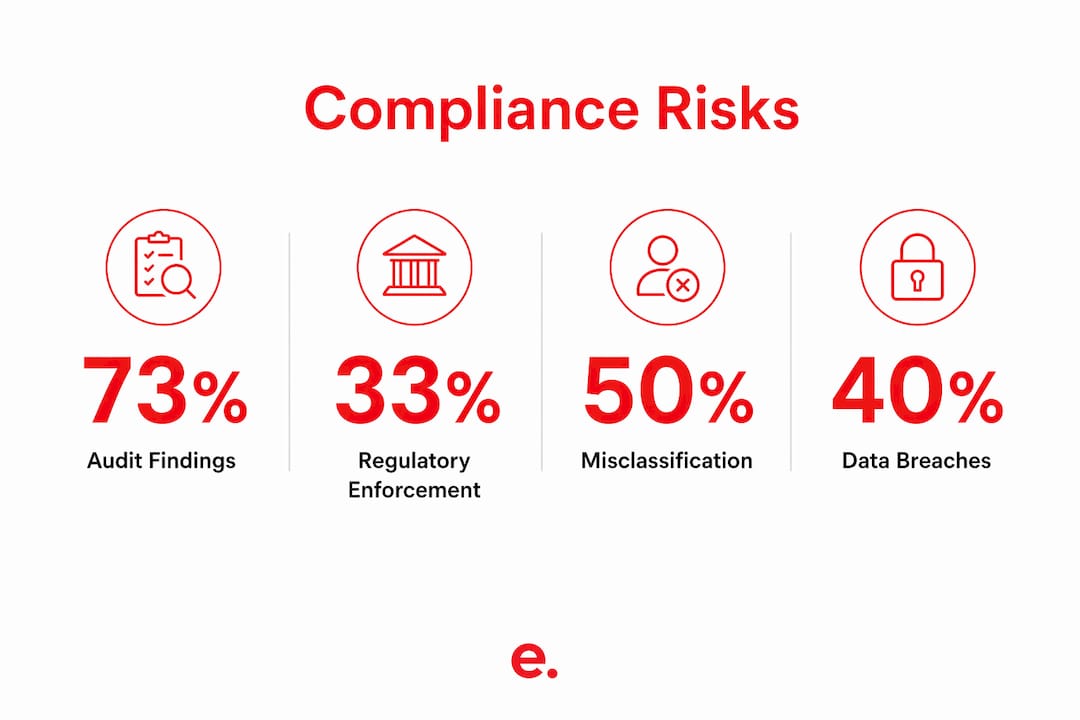
Compliance in global hiring is defined as the practice of meeting every applicable employment law, data privacy regulation, and labor standard in each country where a company hires workers. Roughly 1 in 3 organizations faced a regulatory enforcement action related to hiring in the past year. That number signals a systemic problem, not isolated mistakes. HR professionals and business leaders who treat compliance as a back-office checkbox expose their organizations to fines, talent loss, and reputational damage that compounds over time. Remotee works with companies navigating exactly this challenge, particularly those hiring across India and other high-growth markets where local labor law expertise is non-negotiable.
Why compliance matters in global hiring: key risks and consequences
Compliance failures in global hiring fall into three categories: data privacy breaches, worker misclassification, and improper employment contracts. Each carries a distinct financial and operational cost. Together, they create a risk profile that most organizations underestimate until an audit or enforcement action forces the issue.

Data privacy violations now carry penalties that can threaten a company’s financial stability. Quebec’s Law 25 imposes fines up to CAD 25 million or 4% of global turnover. That scale puts data privacy enforcement on par with GDPR consequences in Europe, and it signals a global shift toward aggressive regulatory action.
Worker misclassification is equally costly. Hiring someone as an independent contractor when local law treats them as a full-time employee triggers back taxes, benefit liabilities, and penalties that accumulate retroactively. The financial exposure grows with every month the misclassification goes uncorrected.
Documentation failures compound both risks. The gap between believing you are compliant and actually proving it surfaces almost exclusively during audits. Without traceable records, offer letters, background check logs, and signed agreements, organizations cannot defend themselves even when their intent was lawful.
Key compliance risks HR leaders face in global hiring include:
- Worker misclassification across contractor and full-time employee categories
- GDPR and regional data privacy violations during candidate screening and data storage
- Non-compliant employment contracts that omit jurisdiction-specific clauses
- Missing audit trails for background checks, consent records, and onboarding steps
- Jurisdictional blind spots when hiring in markets with unfamiliar labor codes
73% of U.S. companies have at least one critical finding during their first comprehensive compliance audit. That statistic means the majority of organizations are operating with hidden exposure they have not yet discovered.
How does compliance build employee trust and strengthen employer branding?
Compliance is not just a legal shield. It is a visible signal to candidates and employees about how a company operates. Employees increasingly expect fair, locally compliant contracts and genuine respect for labor laws. When those expectations go unmet, trust erodes and retention suffers.
The employer brand impact is direct. A company that misclassifies workers or ignores local leave entitlements will see that reputation spread. Candidates in competitive talent markets, particularly in India and Southeast Asia, actively research employer practices before accepting offers. Compliance failures become public through labor disputes, regulatory filings, and employee reviews on professional networks.
“Compliance done right tells your workforce that the company respects the rules of the country they live in. That respect translates into loyalty, referrals, and a reputation that attracts the talent you actually want to hire.”
The positive case is equally strong. Organizations that build global talent acquisition programs around compliant practices report stronger offer acceptance rates and lower early attrition. Candidates interpret a well-structured, legally sound employment offer as evidence of organizational maturity. That perception matters most when competing for senior or specialized talent.
Compliance also protects employer branding during workforce reductions. Companies that follow jurisdiction-specific termination procedures, notice periods, and severance requirements avoid the public disputes that damage their ability to hire in those markets again.
What frameworks enable effective compliance management across global markets?
Global employment regulation is increasingly fragmented due to geopolitical shifts, requiring local adaptation rather than uniform policies. A compliance framework that works in the United States will not map cleanly onto India, Germany, or Brazil. HR leaders need adaptive systems, not static policy documents.
Building an effective compliance framework involves five steps:
- Map your regulatory exposure. Identify every jurisdiction where you hire or plan to hire. List the primary labor laws, data privacy requirements, and tax obligations for each.
- Integrate compliance checks into hiring workflows. Automation that enforces role-specific compliance checks reduces documentation failures and improves audit readiness. Build these checks into your applicant tracking system, not as a separate process.
- Centralize documentation. Store all employment contracts, consent records, and onboarding documents in a searchable, access-controlled system. Audit readiness depends on retrieval speed, not just completeness.
- Assign cross-department ownership. HR, legal, and finance must share accountability for compliance outcomes. Siloed ownership creates gaps at the handoff points between teams.
- Review frameworks quarterly. Regulatory changes in 2026 are arriving faster than annual review cycles can absorb. Build a standing quarterly review into your compliance calendar.
Pro Tip: When entering a new market, consult a local employment attorney before posting the first job. The cost of that consultation is a fraction of the cost of correcting a misclassification or contract error after hiring begins.
The table below shows how compliance responsibilities map across departments in a typical global hiring operation.
| Function | Primary compliance responsibility | Review frequency |
|---|---|---|
| HR | Employment contracts, onboarding documentation | Per hire |
| Legal | Jurisdictional law updates, contract templates | Quarterly |
| Finance | Payroll tax, benefits classification | Monthly |
| IT/Data | Candidate data privacy, GDPR consent records | Per hiring cycle |
For teams managing multi-country offshore operations, this cross-functional model is not optional. It is the minimum structure needed to stay audit-ready across multiple jurisdictions simultaneously.
Practical data protection compliance guidance for multinational HR teams reinforces the same point: documentation standards must be built into the process, not added after the fact.
What operational benefits come from prioritizing hiring compliance?
Compliance delivers measurable operational advantages beyond avoiding penalties. Organizations that build compliance into their hiring workflows report faster onboarding, fewer contract disputes, and greater confidence when entering new markets.
“Framing compliance as a strategic growth enabler rather than a constraint is the most effective way to secure C-suite support for the staffing and resources compliance functions actually need.” — Jamy Sullivan
Scaling globally without sacrificing compliance or speed is achievable through partnerships with specialized Employer of Record services. That finding reflects a structural shift in how growth-stage companies approach international hiring. They are not building local legal entities in every market. They are partnering with EOR providers who already hold that infrastructure.
The operational benefits of a compliance-first approach include:
- Reduced enforcement exposure through documented, auditable hiring processes
- Faster market entry because compliant templates and workflows already exist for target jurisdictions
- Lower legal costs from fewer disputes, corrections, and retroactive filings
- Stronger executive alignment when compliance is framed as a revenue and growth function
- Improved offshore staffing risk management across multiple simultaneous hiring markets
The connection between compliance and growth is direct. Companies that can demonstrate clean compliance records attract better talent, close partnerships faster, and face fewer obstacles when regulators review their operations. Compliance is not a cost center. It is a growth function that pays for itself through avoided penalties and accelerated hiring.
Key Takeaways
Global hiring compliance is the single most effective way to protect operational continuity, build workforce trust, and enter new markets with confidence.
| Point | Details |
|---|---|
| Enforcement risk is high | Roughly 1 in 3 organizations faced a regulatory enforcement action in the past year. |
| Audit gaps are common | 73% of U.S. companies find critical compliance issues during their first comprehensive audit. |
| Compliance builds trust | Employees expect locally compliant contracts; failures damage retention and employer brand. |
| Frameworks must be adaptive | Regulatory fragmentation requires jurisdiction-specific compliance, not uniform global policies. |
| EOR partnerships accelerate compliance | Employer of Record services enable compliant, fast global hiring without building local legal entities. |
Compliance as a growth function, not a legal checkbox
I have spent years watching HR leaders treat compliance as something that belongs to the legal department. That framing is the root cause of most compliance failures I see in global hiring programs.
The organizations that get compliance right are the ones where HR owns it as a business function. They do not wait for legal to flag a problem. They build compliant workflows before the first hire in a new market, and they review those workflows when regulations shift. That proactive posture is what separates companies that scale cleanly from those that hit expensive roadblocks at 50 or 500 employees.
The misconception I encounter most often is that compliance slows hiring down. The opposite is true. When your contract templates are current, your documentation is centralized, and your payroll classifications are correct, hiring moves faster. You are not stopping to fix problems. You are executing a process that already works.
My recommendation to HR leaders in 2026 is to reframe compliance conversations with your executive team using the language Jamy Sullivan describes: connect compliance directly to revenue, market entry speed, and talent acquisition outcomes. That framing gets budget approved. It also gets the cross-functional collaboration from legal and finance that compliance programs actually need to function.
Compliance is the competitive advantage that most companies are leaving on the table.
— Rajkumar
How Remotee helps HR leaders hire compliantly across global markets
HR leaders who need to hire in India without building a local legal entity have a direct path through Remotee’s Employer of Record services. Remotee manages employment contracts, payroll tax, statutory benefits, and local labor law compliance on behalf of client companies. That means your team focuses on finding and managing talent while Remotee handles the regulatory infrastructure.
Clients report up to 32% savings on hiring costs compared to traditional recruitment and entity-setup approaches. Remotee’s offshore hiring solutions cover the full compliance lifecycle, from onboarding documentation through payroll processing and termination procedures. For HR leaders building global teams in 2026, that combination of speed, cost efficiency, and compliance assurance is the practical alternative to managing jurisdictional complexity alone.
FAQ
What is compliance in global hiring?
Compliance in global hiring means meeting all applicable employment laws, data privacy regulations, and labor standards in every country where a company recruits or employs workers. It covers contracts, payroll classification, data handling, and documentation.
What are the biggest compliance risks in international recruitment?
The most common risks are worker misclassification, data privacy violations, and non-compliant employment contracts. Roughly 1 in 3 organizations faced a regulatory enforcement action related to hiring in the past year.
How does an Employer of Record reduce compliance risk?
An Employer of Record legally employs workers on behalf of a client company in a target jurisdiction. EOR services enable compliant, rapid global hiring without requiring the client to establish a local legal entity or manage local labor law directly.
Why do compliance audits reveal so many problems?
Most organizations assume they are compliant without building traceable documentation into their hiring workflows. 73% of U.S. companies discover at least one critical finding during their first comprehensive compliance audit.
How often should global hiring compliance frameworks be reviewed?
Compliance frameworks should be reviewed at least quarterly. Regulatory fragmentation is intensifying due to geopolitical shifts, and annual reviews are too slow to catch changes that affect active hiring programs.