Offshore Video Editor Hiring Guide for Businesses in 2026

TL;DR:
- Hiring offshore video editors can reduce annual salary costs by up to 84 percent, making it a highly effective staffing strategy. Success depends on a disciplined hiring process, thorough vetting, and proper onboarding, which significantly lowers failure rates. Building a structured workflow and using dedicated editors improve quality and consistency for long-term results.
Hiring an offshore video editor cuts annual salary costs by 60–84% compared to U.S. hires, making it one of the highest-return staffing decisions a media company can make. Offshore roles typically cost $30,000–$48,000 per year, while domestic editors run $65,000–$181,000. The gap is real, but the savings only materialize when you follow a disciplined offshore video editor hiring guide built on structured vetting, clear onboarding, and proper compliance. A 5-stage vetting framework achieves a 92% placement success rate. Remotee’s Employer of Record service handles payroll, HR, and compliance so your team focuses on production, not paperwork.
What are the prerequisites before hiring offshore video editors?
Preparation determines whether your offshore hire succeeds in week one or stalls for months. Before you post a single job listing, define exactly what you need from a video editor.
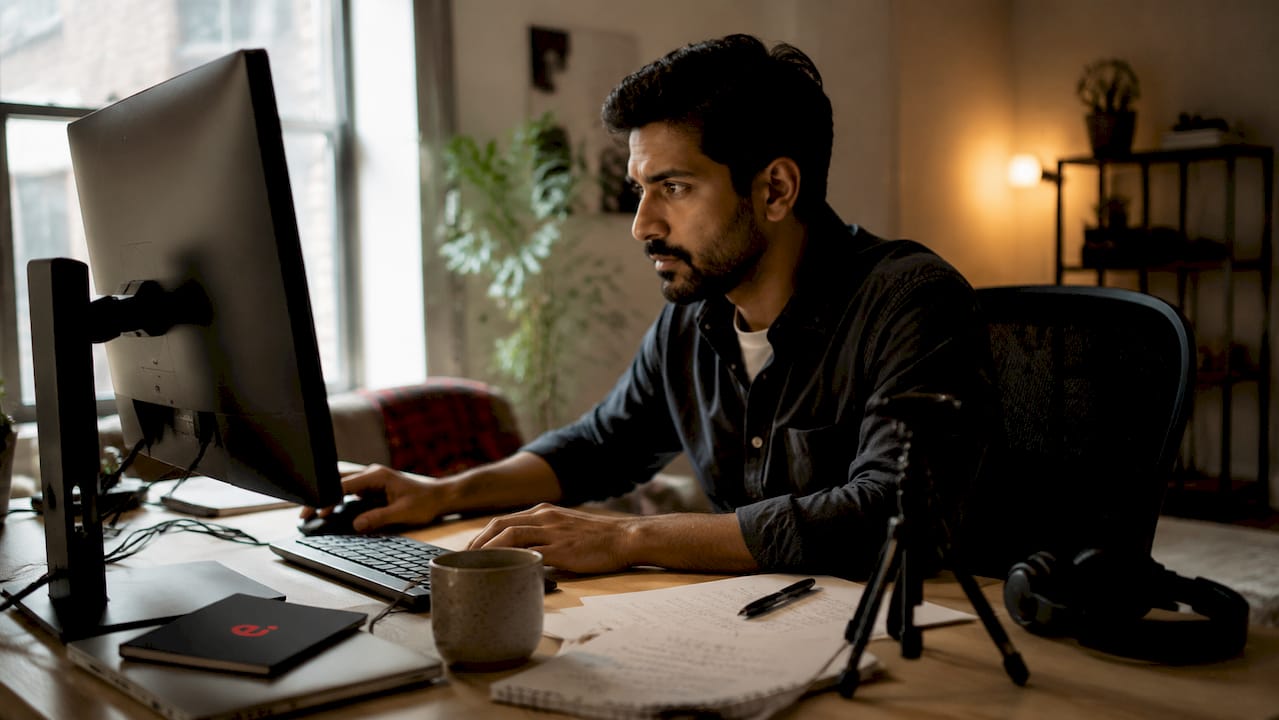
Start by documenting your content types, platforms, and output volume. A YouTube channel producing four long-form videos per week has completely different requirements than a brand running short-form Instagram Reels. Write down the editing style, typical video length, turnaround time per video, and the software stack your team already uses.
Required software skills to specify upfront:
- Adobe Premiere Pro for timeline editing and multicam workflows
- After Effects for motion graphics and title sequences
- DaVinci Resolve for color grading and audio post-production
- Photoshop or Illustrator for thumbnail creation and graphic assets
- Frame.io or Cutback for timestamped review and client approval
Brand style guides and SOPs prepared before onboarding allow editors to start editing immediately with reduced confusion. Build an asset handoff checklist that covers folder structure, naming conventions, raw footage delivery, and approval workflows. Tools like Notion or Airtable work well for organizing these documents.
Pro Tip: Create a one-page “first edit brief” that shows your brand fonts, color palette, preferred cut pace, and three reference videos. Hand this to every new editor on day one. It eliminates 80% of early revision cycles before they start.
Feedback quality matters as much as the brief. Timestamped review tools like Frame.io reduce revision cycles far more effectively than feedback sent through Slack or email. Vague feedback like “make it more dynamic” wastes days. Specific feedback like “cut the pause at 1:42 and add a zoom transition” gets resolved in one round.
How to implement a proven vetting process for offshore video editors
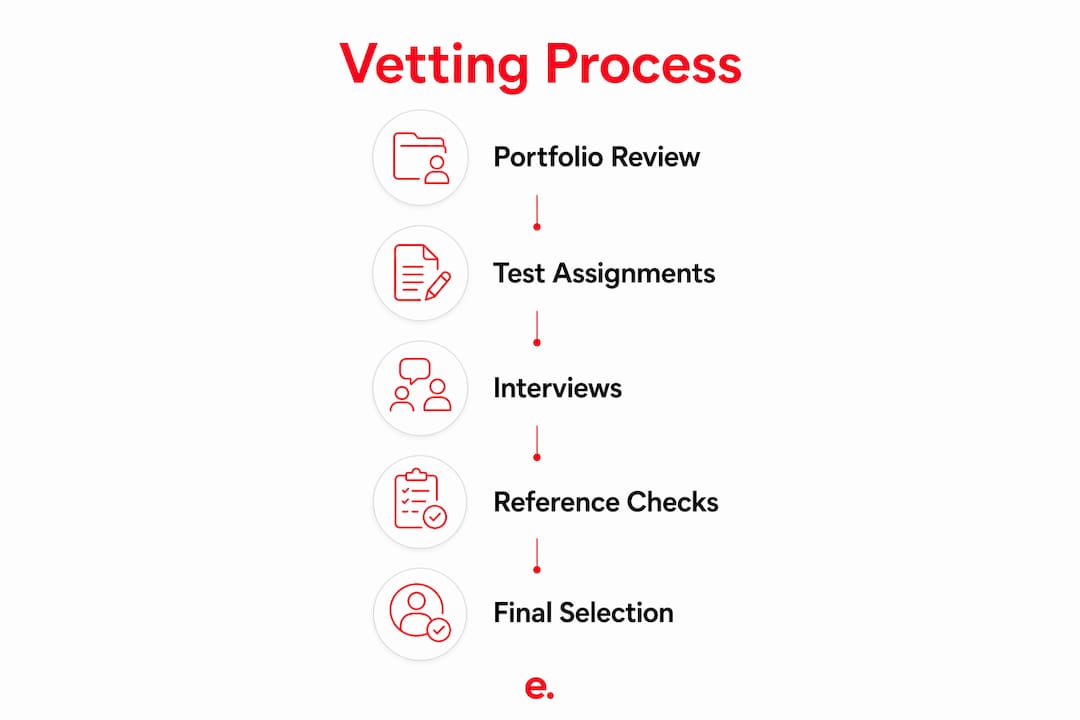
Without systematic vetting, offshore hiring fails 62% of the time. That failure rate drops to 8% when you apply a structured, five-stage process. Each stage filters out a different category of risk.
The five-stage vetting framework
-
Portfolio review. Evaluate three to five recent projects that match your content type. Look for consistent pacing, clean audio sync, and color consistency. Reject portfolios that show only one style or rely heavily on stock footage to mask weak editing.
-
Technical software proficiency test. Send a short skills assessment covering the specific tools in your stack. Ask candidates to demonstrate a multicam sync in Premiere, a basic color grade in DaVinci Resolve, or a simple motion graphic in After Effects. This filters out candidates who list software they cannot actually use.
-
Paid real-world test project. Assign a short edit using your actual footage. A paid test project stipend of $50–$100 reveals real-world skills and work ethic far more accurately than a portfolio alone. Unpaid tests attract low-effort submissions. Paid tests attract serious candidates.
-
Revision responsiveness assessment. After the test project, provide two or three specific revision notes and measure how the candidate incorporates them. Speed, accuracy, and attitude during revisions predict long-term collaboration quality better than the original edit.
-
Cultural fit interview. Conduct a 30-minute video call focused on communication style, availability, and how the candidate handles unclear briefs. Ask for a specific example of a time they received confusing feedback and how they resolved it.
| Stage | What it filters | Time required |
|---|---|---|
| Portfolio review | Style and experience mismatch | 15–30 minutes per candidate |
| Software proficiency test | Skill gaps and false claims | 1–2 hours per candidate |
| Paid test project | Real-world quality and work ethic | 2–3 days |
| Revision responsiveness | Collaboration and adaptability | 1–2 days |
| Cultural fit interview | Communication and reliability | 30 minutes |
Pro Tip: Run stages one and two simultaneously to cut total screening time. Only advance candidates who pass both before investing in a paid test project.
What are best practices for onboarding and managing offshore video editors?
Onboarding sets the tone for the entire working relationship. A disorganized first two weeks creates habits that are hard to break. A structured start builds the trust and predictability that long-term collaboration requires.
Treating offshore editors as integrated team members with predictable production schedules produces better output than treating them as on-demand contractors. Give your editor a fixed weekly schedule, a recurring project queue, and a clear escalation path for questions. Predictability reduces errors and improves retention.
Onboarding checklist for the first two weeks:
- Share brand style guide, SOP documents, and asset folder structure on day one
- Walk through one complete project together using screen share
- Set up the review platform (Frame.io or Cutback) and run a test feedback round
- Establish a weekly check-in call for the first month
- Define the revision policy: how many rounds are included, and what triggers a scope discussion
Specialized staffing partners typically complete onboarding in 7–15 days, including screening, assessments, and HR compliance. That timeline assumes your collaboration infrastructure is ready before the editor starts. If your SOPs and asset folders are not prepared, onboarding stretches significantly longer.
Timezone management is a practical concern, not a dealbreaker. Editors in India work well for U.S. companies that send footage at end of day and receive edited cuts the following morning. This “overnight production” model works only when briefs are specific enough to require no clarification before editing begins.
Dedicated offshore editors working exclusively for one client produce better brand alignment and fewer missed deadlines than editors splitting time across five or more clients. Shared resources prioritize whoever is loudest, not whoever has the most urgent deadline. Dedicated hires give you consistent output and a team member who genuinely learns your brand voice.
Pro Tip: Use offshore staff retention strategies like quarterly performance reviews, public recognition in team channels, and clear paths to expanded responsibilities. Editors who feel valued stay longer and improve faster.
What are the most common challenges when hiring offshore video editors?
Most offshore hiring failures trace back to process problems, not talent problems. High failure rates stem from poor vetting and misaligned expectations, not from a shortage of skilled editors in offshore markets.
Common failure causes and early warning signs:
- Vague briefs. If your editor asks the same clarifying questions on every project, your brief template needs work, not your editor.
- Generic feedback. Feedback like “this doesn’t feel right” forces editors to guess. Timestamped, specific notes fix this immediately.
- No revision policy. Without a defined number of revision rounds, scope creep becomes the norm and deadlines slip.
- Cultural misalignment. An editor who avoids flagging problems to preserve harmony will deliver late work without warning. Address this directly in the cultural fit interview.
- Multi-client overload. An editor juggling too many clients misses your deadlines because someone else’s urgent request took priority.
“Vague feedback is the main enemy of efficient video editing workflows. Using clear written SOPs with branding elements reduces revision cycles drastically and protects both the editor’s time and the client’s budget.”
When you spot early warning signs, act quickly. A missed deadline on week two is a data point. A missed deadline on week six is a pattern. Address it with a direct conversation, a revised brief process, or a structured performance improvement plan. If the pattern continues after two corrective rounds, replace the hire before it costs you a production cycle.
Offshore location selection also affects communication quality. India offers a large pool of Adobe-certified editors, strong English proficiency, and a timezone that suits overnight production for U.S. teams. The Philippines offers similar English fluency with a timezone closer to Australian and Asian markets.
Key Takeaways
A disciplined vetting and onboarding process is the single most important factor in offshore video editor success, not the talent market or the cost savings alone.
| Point | Details |
|---|---|
| Cost savings are substantial | Offshore editors cost $30,000–$48,000 annually versus $65,000–$181,000 for U.S. hires. |
| Vetting framework reduces failure | A 5-stage process drops the failure rate from 62% to 8% and raises placement success to 92%. |
| Preparation enables fast starts | Brand style guides, SOPs, and asset folders must be ready before the editor’s first day. |
| Dedicated hires outperform shared resources | Editors working exclusively for one client deliver better brand alignment and fewer missed delays. |
| Feedback quality drives efficiency | Timestamped, specific feedback through tools like Frame.io cuts revision cycles significantly. |
Why most businesses get offshore video hiring backwards
I’ve watched companies spend weeks debating whether to hire offshore at all, then rush the actual hiring process in three days. That’s the wrong order of operations entirely.
The businesses that get the most from offshore video editors are not the ones with the biggest budgets or the most sophisticated tech stacks. They are the ones that treat the vetting process as a product they build once and use forever. A well-designed test project brief, a clear revision rubric, and a 30-minute cultural fit script are assets that pay dividends on every hire you make after the first.
The misconception I hear most often is that offshore talent quality is lower than domestic talent. That’s not what the data shows. A 62% failure rate without systematic vetting is a process failure, not a talent failure. The same hire, run through a structured five-stage process, succeeds 92% of the time. The talent didn’t change. The process did.
The agencies scaling fastest right now treat offshore creative hiring as a core business competency, not a cost-cutting experiment. They invest in collaboration infrastructure, build feedback culture deliberately, and hire dedicated editors who grow with the brand. That’s not outsourcing. That’s building a production team that happens to be located somewhere else.
— Rajkumar
How Remotee helps you hire offshore video editors the right way
Remotee’s offshore hiring services cover the full process from candidate vetting to payroll compliance, so you get a production-ready editor without managing the administrative complexity yourself.
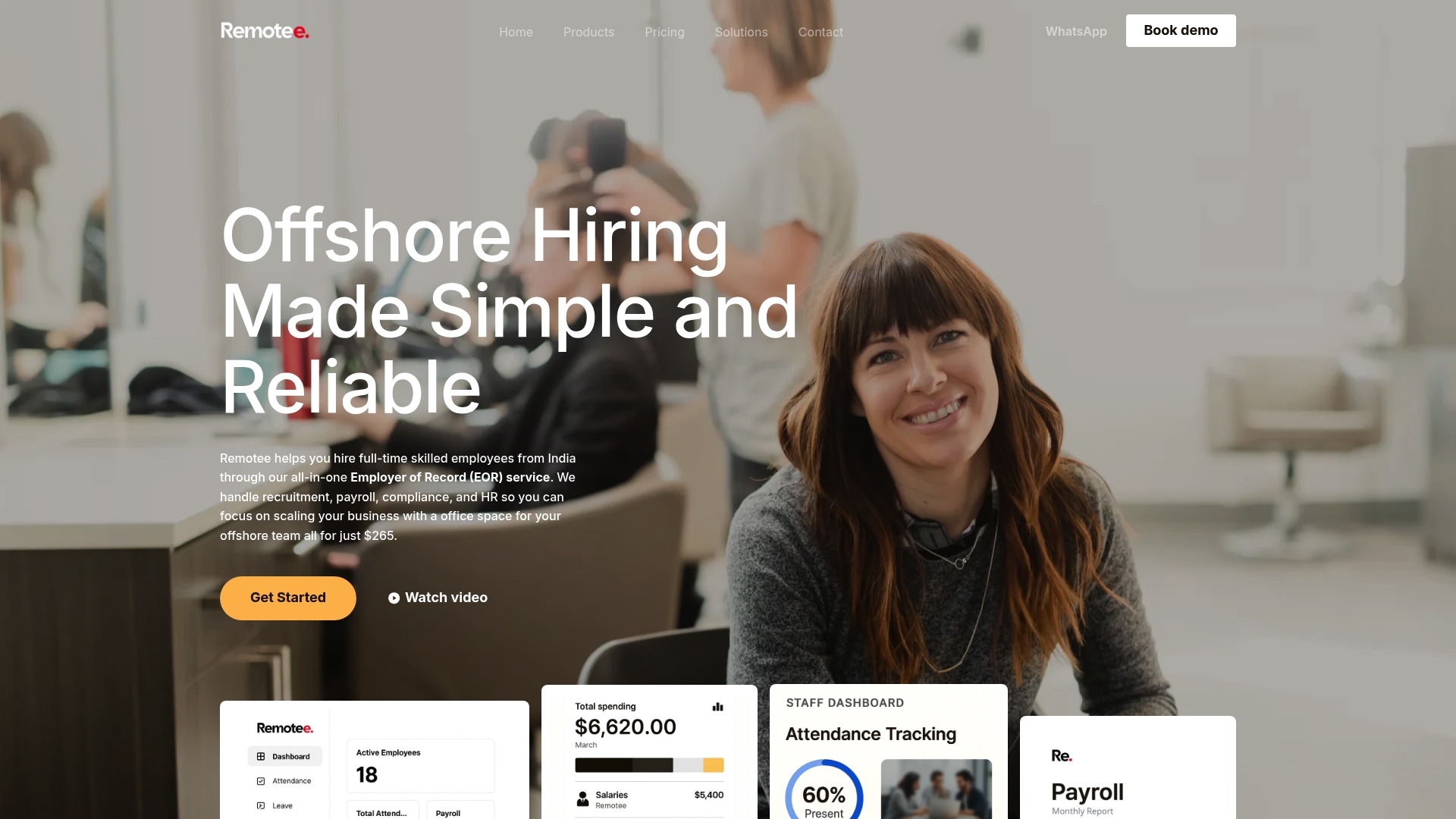
Remotee’s Employer of Record model handles contracts, payroll, and local labor law compliance for full-time hires in India. Clients report up to 32% savings on total hiring costs compared to managing offshore employment independently. The vetting process Remotee applies is built on the same five-stage framework described in this article, with placement success rates that reflect it. If you want a dedicated offshore video editor who is screened, onboarded, and legally employed within two weeks, Remotee’s payroll and compliance infrastructure makes that timeline realistic.
FAQ
How much does an offshore video editor cost per year?
Offshore video editors typically cost $30,000–$48,000 annually, compared to $65,000–$181,000 for U.S.-based editors. The savings range from 60% to 84% depending on experience level and location.
What software skills should an offshore video editor have?
The most in-demand skills are Adobe Premiere Pro, After Effects, and DaVinci Resolve. Thumbnail design in Photoshop and familiarity with review tools like Frame.io are strong secondary qualifications.
How long does it take to onboard an offshore video editor?
With a specialized staffing partner, onboarding typically takes 7–15 days. That timeline assumes your brand style guides, SOPs, and asset folders are ready before the editor starts.
Why do most offshore video editing hires fail?
Most failures come from poor vetting and unclear expectations, not from a lack of talent. Without a structured vetting process, the failure rate reaches 62%. A five-stage framework reduces that to 8%.
Should I hire a dedicated editor or use a shared resource?
A dedicated editor working exclusively for your company produces better brand alignment and fewer missed deadlines. Editors splitting time across five or more clients struggle to prioritize any single client’s work consistently.