How to Manage Multi-Country Offshore Operations
TL;DR:
- Effective offshore management relies on central governance, clear decision rights, and standardized technology to prevent operational chaos.
- Implementing a hybrid control model with documented processes, regular cross-country meetings, and local leadership enhances compliance and team retention.
Managing multi-country offshore operations is defined as coordinating people, compliance, and finances across two or more foreign jurisdictions under a unified governance model. The standard industry term for this practice is global operations management, and it covers everything from transfer pricing policies to payroll tax regimes. SME leaders who get it right build a centralized control layer while giving local units enough room to execute. Those who skip the governance work early pay for it later in fines, audit delays, and fragmented teams. This article gives you the frameworks, tools, and compliance practices that actually work.
What governance structures enable effective multi-country offshore operations?
A global operating model is a system design that intentionally aligns decision rights, governance, and technology across borders to prevent fragmented execution. Fragmented execution is the single most common reason offshore expansions stall. The fix is not more meetings. It is a clear governance structure built before you scale.

The hybrid centralized-decentralized model is the most effective structure for SMEs. Central headquarters sets policy, owns compliance standards, and controls financial reporting. Local units own execution, client relationships, and day-to-day staffing decisions. This split keeps you in control without slowing down the people closest to the work.
Key governance elements to put in place:
- RACI matrix: Assign Responsible, Accountable, Consulted, and Informed roles for every cross-border decision. This eliminates the “who owns this?” paralysis that kills response times.
- Quarterly cross-jurisdiction steering committees: Bring finance, legal, and operations leads from each country together four times a year. Use these sessions to surface regulatory changes before they become crises.
- Escalation paths with time limits: Statutory differences should resolve within 30 days. A 30-day window forces accountability and prevents small compliance gaps from compounding.
- Documented decision rights: Every country unit needs to know which decisions it can make alone and which require headquarters sign-off.
- Transfer pricing policies: Document intercompany pricing before your first cross-border invoice. Tax authorities in every major jurisdiction scrutinize these.
Pro Tip: Write your escalation path document before you register your second entity. Retrofitting governance onto a live operation costs three times as much in legal fees and lost time.
CEOs are redesigning multinational structures toward semi-autonomous regional units with local leadership to absorb political shocks and regulatory changes. That shift is not a trend. It is a response to real geopolitical risk that every SME expanding offshore now faces.
What technology and tools support multi-jurisdiction operational management?
Technology does not replace governance. It enforces it. The right tools give you real-time visibility across every entity without requiring a full-time analyst in each country.
A unified ERP system enables real-time financial rollups, standardized compliance reporting, and improved operational visibility across multiple jurisdictions. That means your CFO sees consolidated numbers the same day, not 30 days after month-end close.
The core technology stack for multi-country offshore business management:
| Tool category | Primary function | Compliance benefit |
|---|---|---|
| Unified ERP | Real-time financial consolidation | Standardized reporting across entities |
| Cloud HR platform | Centralized employee records | Consistent documentation for audits |
| Digital contract repository | Stores intercompany agreements | Speeds bank onboarding and tax audits |
| Payroll software by jurisdiction | Local tax calculation and filing | Reduces withholding errors |
| Project management platform | Cross-border task tracking | Standardized KPI reporting |
Cloud-based platforms give regional shared services teams access to the same data without building duplicate infrastructure in each country. A hub-and-spoke model, where a centralized regional office runs finance, compliance, and strategy, lets local teams focus on delivery. That focus directly improves output quality and reduces overhead.
Automation matters most in compliance workflows. Automated reminders for filing deadlines, license renewals, and payroll tax submissions catch the errors that manual tracking misses. Store all intercompany agreement templates digitally so any team member can pull the correct version during an audit or banking review.
Pro Tip: Before selecting an ERP, confirm it supports local statutory reporting in every country you operate in. A system that handles U.S. GAAP but not Indian Ind AS or Philippine BIR filings creates more work, not less.
How do you coordinate communication across offshore teams?
Communication breakdown is the hidden cost of multi-country project coordination. Teams in different time zones, speaking different languages, and operating under different regulatory cultures will drift apart without deliberate structure.
The most effective approach combines standardized protocols with local leadership empowerment. Here is a practical communication framework for managing overseas teams:
- Set a weekly cross-border standup. Keep it to 30 minutes. Cover blockers, compliance flags, and priority shifts. Rotate the meeting time so no single region always takes the early or late slot.
- Appoint a local communication lead in each country. This person translates headquarters decisions into local context and escalates issues before they become incidents.
- Document every policy in a shared, searchable repository. Use one language for all policy documents, typically English, with local-language summaries where needed.
- Create a compliance escalation communication flow. When a statutory issue surfaces, the local lead notifies the regional hub within 24 hours. The hub notifies headquarters within 48 hours. Resolution is tracked against the 30-day SLA.
- Run quarterly all-hands sessions across entities. These build shared identity and reduce the “us vs. them” dynamic that fragments offshore operations over time.
Cultural sensitivity is not a soft skill in this context. It is an operational requirement. Local leaders who feel heard and empowered make better decisions faster. Headquarters that imposes every policy without local input creates quiet resistance that shows up in missed deadlines and high turnover. Your offshore staff retention rate is a direct measure of how well your communication model is working.
What are the critical compliance and risk management practices?
Structural instability from regulatory and operational fragmentation is the top risk during rapid multinational scaling. The operating model must act as stabilizing architecture. That means compliance is not a department. It is a design principle baked into every process.
Core compliance and risk practices for international business operations:
- 90-day remediation SLAs: Medium-risk compliance deficiencies require a 90-day resolution window. Track every open item in a central incident register with an assigned owner and a due date.
- Central incident playbook: Document the response steps for the most common compliance failures: missed payroll filings, expired business licenses, and transfer pricing disputes. A playbook cuts response time by removing ambiguity.
- Documented intercompany agreements: Written intercompany agreements for management services, IP licensing, and cost sharing are critical for bank onboarding, tax audits, and investor due diligence. Neglecting them until a crisis causes delays that can take months to resolve.
- Regional legal partners: Retain a local legal contact in each jurisdiction. They flag regulatory changes before they affect your operations.
- Quarterly risk committee reviews: Review your risk register, insurance coverage, and open compliance items every quarter. Adjust your coverage as you add entities or headcount.
“The operating model is the core architecture that prevents chaos during rapid scaling. Without it, every new country adds complexity faster than it adds value.” — International Operating Model framework guidance
Use your offshore staffing risk checklist as a baseline audit tool each time you enter a new market. It surfaces gaps in documentation, insurance, and local compliance that are easy to miss during a fast expansion.
What are the common challenges when managing offshore teams across countries?
The practical problems in offshore business management are rarely the ones leaders plan for. Banking, payroll, and onboarding create the most friction, and they all have known solutions.
- Banking setup delays. Most reputable international banks require trusted introducers for corporate account applications. Solo applications face delays or outright rejection. Engage a local accountant or legal firm with existing bank relationships before you apply.
- Payroll complexity across tax regimes. Payroll across jurisdictions involves tax residency rules, withholding obligations, and currency conversion issues that differ by country. Coordinate your treasury and compliance functions so payroll runs on time and in the correct currency.
- Fragmented execution. When each country unit uses different tools, templates, and reporting formats, consolidation becomes a manual nightmare. Standardize your project management platform, reporting templates, and KPI definitions across all entities from day one.
- Onboarding and documentation gaps. Every offshore hire needs a compliant employment contract, a tax registration number, and a clear job description that matches local labor law. Missing any one of these creates audit exposure. The role of HR in offshore hiring is to own this checklist and enforce it consistently.
- Intercompany agreement gaps. Companies that draft intercompany agreements early move through banking onboarding and tax audits in weeks. Those that draft them reactively spend months in back-and-forth with auditors and banks.
Pro Tip: Run a mock audit on each new entity six months after launch. Pull the intercompany agreements, payroll records, and compliance filings and check them against local requirements. Fix gaps while they are small.
Key Takeaways
Effective global operations management requires centralized governance, standardized technology, and documented compliance processes built before you scale to a second or third country.
| Point | Details |
|---|---|
| Build governance first | Set RACI matrices, escalation paths, and decision rights before registering your second entity. |
| Use a unified ERP | Real-time financial rollups and standardized compliance reporting prevent costly month-end surprises. |
| Document intercompany agreements early | Written agreements for management services and IP licensing speed audits and bank onboarding. |
| Set compliance SLAs | Resolve statutory issues within 30 days and medium-risk deficiencies within 90 days to limit exposure. |
| Empower local leads | Local communication and compliance leads reduce response times and improve team retention. |
The governance trap most SMEs fall into
Most SME leaders I have worked with make the same mistake when expanding offshore. They centralize everything at first because it feels safer. Every decision goes through headquarters. Every approval requires a sign-off from someone in a different time zone. Within six months, local teams stop flagging problems because the response time is too slow to matter.
The opposite failure is just as common. Leaders who delegate too much end up with five country units running five different payroll systems, five different contract templates, and five different interpretations of the same compliance policy. Consolidating that mess costs more than building it right the first time.
The answer is not a balance point on a spectrum. It is a deliberate architecture. Policy is centralized. Execution is local. Technology connects both layers in real time. Governance documents define exactly where the line sits for every decision category.
Geopolitical risk is making this harder. Regulatory environments that were stable three years ago are now shifting fast. The leaders who are handling this well are the ones who invested in local legal relationships early and built escalation paths that actually get used. They also accepted, as the research on modern global operations confirms, that some redundancy in the system is not waste. It is resilience.
My advice to any SME leader preparing to add a second or third offshore entity: spend 60 days on governance design before you spend a dollar on entity registration. The governance work is what makes everything else manageable.
— Rajkumar
How Remotee supports offshore workforce and compliance management
Running payroll, maintaining compliance, and hiring full-time employees across multiple countries is operationally demanding. Remotee’s Employer of Record service in India handles employment contracts, statutory filings, and HR administration so your team focuses on growth, not paperwork. Clients report up to 32% savings on hiring costs compared to traditional recruitment approaches.
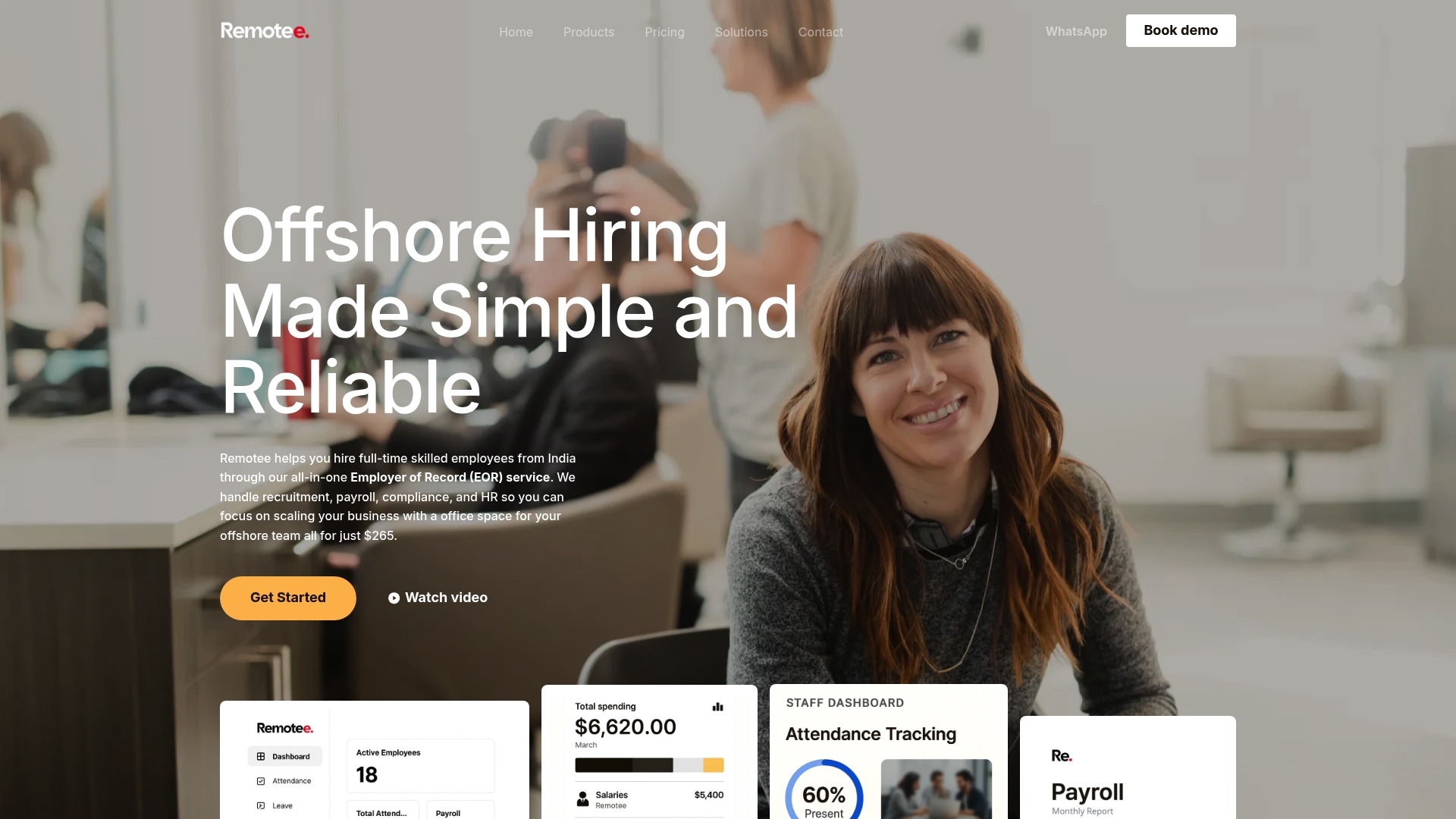
Remotee also manages payroll and compliance across jurisdictions, covering tax withholding, benefits administration, and local labor law requirements. If you are building or expanding an offshore team and need a partner who handles the compliance layer end to end, Remotee is built for exactly that.
FAQ
What does it mean to manage multi-country offshore operations?
Managing multi-country offshore operations means coordinating employees, compliance, payroll, and governance across two or more foreign jurisdictions under a unified operating model. The goal is centralized control over policy with local flexibility in execution.
What is the recommended SLA for resolving compliance issues offshore?
Statutory differences should resolve within 30 days, and medium-risk compliance deficiencies require a 90-day remediation window. These timelines come from established multi-jurisdictional management best practices.
Why do offshore banking applications get rejected?
Most reputable international banks require corporate account applications through trusted introducers with existing relationships. Solo applications without an introducer frequently face delays or rejection, regardless of the company’s financial standing.
How do intercompany agreements help offshore operations?
Documented intercompany agreements for management services, IP licensing, and cost sharing speed tax audits, bank onboarding, and investor due diligence. Companies that draft these agreements early avoid months of reactive legal work during audits.
What technology is most important for managing overseas teams?
A unified ERP system is the most critical tool. It provides real-time financial consolidation, standardized compliance reporting, and operational visibility across all jurisdictions without requiring duplicate infrastructure in each country.