Offshore Storyboard Artist Recruitment: 2026 Hiring Guide
TL;DR:
- Offshore storyboard artist recruitment involves sourcing skilled visual storytellers from international markets to cut costs without sacrificing quality. A structured hiring process that emphasizes cinematic storytelling, practical testing, and technical compatibility ensures successful hires. Effective management includes milestone-based deliverables, clear communication protocols, and fair contractual arrangements to maintain production quality and timeliness.
Offshore storyboard artist recruitment is the process of sourcing skilled visual storytellers from international markets to support media production at a lower cost without sacrificing creative quality. Media and entertainment companies increasingly turn to this model to access deep talent pools, particularly from India, where cinematic training and animation industry infrastructure have grown substantially. The standard industry term for this practice is international creative staffing, though the offshore framing reflects the budget and workflow realities most production teams face. A structured approach covering portfolio review, production readiness, and communication competency separates successful hires from costly mismatches.
What qualifications should you look for in offshore storyboard artists?
The most valued offshore storyboard artists are cinematic storytellers, not just illustrators. Hiring studios prioritize portfolios that demonstrate camera angles, staging, pacing, and narrative continuity over raw drawing skill. A candidate who can translate a script into a compelling visual sequence with clear emotional beats is worth far more to a production team than one who simply draws well.
The baseline qualification for most professional engagements is 1–5 years of industry experience. Beyond tenure, the specific competencies that matter most include:
- Cinematic language: Shot framing, scene transitions, character blocking, and continuity across sequences
- Narrative sequencing: Ability to compress or expand story beats based on script and director intent
- Character acting: Conveying emotion and motivation through pose and expression, not just action
- Technical proficiency: Working knowledge of Toon Boom Storyboard Pro, the industry standard for production-ready boards
- Animatic production: Delivering timed, voiced, or scored animatics at rates such as $0.60 per second of finished output
- Remote communication: Clear written feedback response, proactive status updates, and async collaboration skills
Portfolio requirements go beyond showing finished boards. Production teams expect candidates to submit work that includes shot numbering, timing notes, and file formats compatible with pipelines like After Effects or Unreal Engine. Production-ready boards with these elements reduce post-production rework significantly.
Pro Tip: Ask candidates to submit a short animatic test using a provided script page. This reveals cinematic interpretation ability, software fluency, and how they handle ambiguity, all in one deliverable.
How should you structure the offshore storyboard artist hiring process?
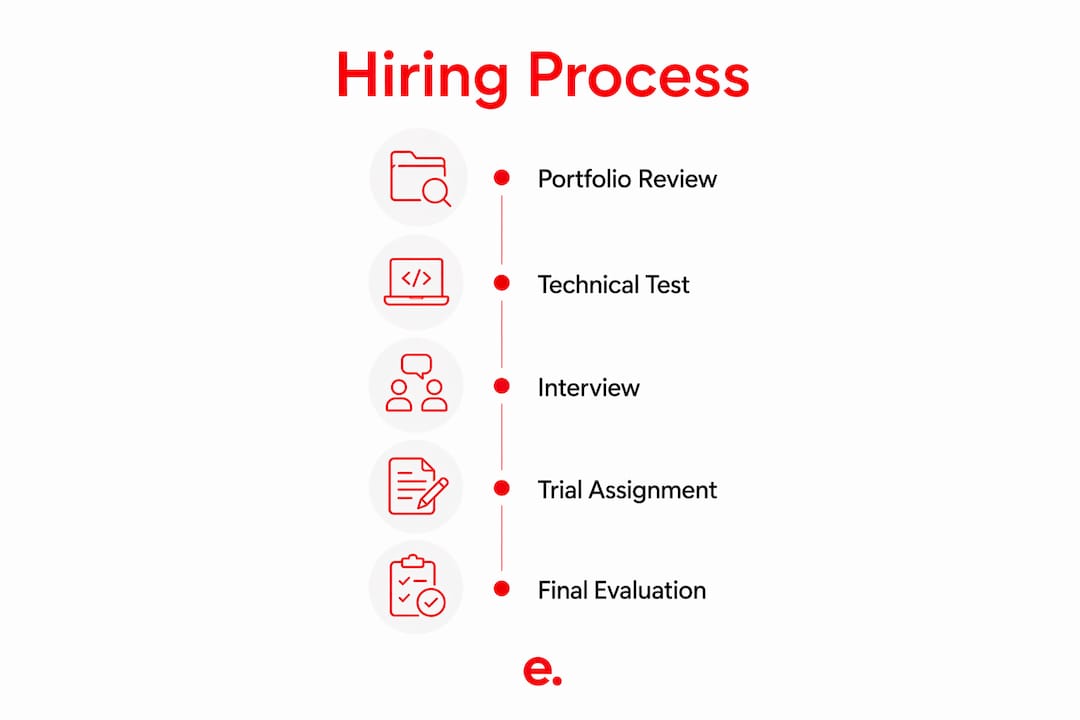
A structured hiring process prevents the most common failure point in outsourcing storyboard creation: bringing on an artist whose style and workflow are incompatible with your production pipeline. The process works best when it follows a defined sequence.
- Define project scope first. Specify whether the engagement covers a short pilot (typically six weeks) or a full season of 12 episodes. Contract duration shapes everything from candidate expectations to payment structure.
- Source through portfolio networks. Professional animation job boards and creative talent networks surface candidates with verifiable production credits. Generic freelance platforms rarely yield artists with the cinematic storytelling depth production teams need.
- Screen portfolios for cinematic language first. Reject portfolios that show only character illustrations or static concept art. Require animatics or sequential boards with clear pacing decisions.
- Conduct a practical test. Provide a one-page script excerpt and ask candidates to board three to five shots. Evaluate camera choice, staging logic, and how closely they follow the implied emotional tone.
- Assess director collaboration experience. Ask candidates directly how they handle revision notes. Reliability under iterative feedback is the most overlooked quality in the hiring process.
- Confirm technical compatibility. Verify the candidate’s software versions, file export formats, and naming conventions before any contract is signed.
- Establish onboarding documentation. Provide a workflow guide covering feedback loop timing, file naming standards, revision round limits, and escalation contacts.
The table below maps each hiring stage to its primary evaluation criteria.
| Hiring stage | What to evaluate |
|---|---|
| Portfolio review | Cinematic language, animatic quality, shot variety |
| Practical test | Script interpretation, staging logic, software output |
| Interview | Director feedback experience, async communication style |
| Technical check | Software versions, file formats, pipeline compatibility |
| Onboarding | Workflow documentation, naming conventions, feedback cadence |
How do you manage offshore storyboard artists during production?
Quality control in remote storyboard workflows depends on structure, not trust alone. The most effective teams set deliverable milestones at the scene or sequence level rather than waiting for full episode submissions. This catches misalignments early, when corrections cost hours rather than days.
The core practices that keep offshore storyboard projects on track include:
- Weekly status updates: Require a short written summary of completed panels, current blockers, and next milestones every Monday
- Structured feedback sessions: Schedule video reviews at defined revision points rather than sending notes asynchronously through email
- File and naming standards: Mandate consistent shot numbering, scene labels, and export formats from day one. Structured remote pipelines with clear naming conventions reduce integration errors at the editorial stage
- Performance bonuses: Bonuses tied to on-time delivery improve reliability in asynchronous offshore workflows. A modest bonus for hitting episode deadlines without revision overruns changes artist behavior meaningfully
- Pipeline tool alignment: Confirm that the artist’s Toon Boom Storyboard Pro version exports cleanly into your After Effects or Unreal Engine pipeline before production begins
Time zone differences are the most cited challenge in managing offshore creative teams. The practical fix is a 24-hour feedback rule: all director notes must be submitted within one business day of receiving a deliverable, and the artist must acknowledge receipt within the same window. This prevents the compounding delays that derail episode schedules.
Pro Tip: Build a shared revision log in a tool like Google Sheets or Notion. Each row tracks the scene, the note, the artist’s response, and the approval status. This eliminates “I never got that note” disputes and gives directors a clear audit trail.
How do you set fair compensation and contract terms for offshore storyboard artists?
Compensation for offshore storyboard work varies more than most production budgets anticipate. Rates range from $50 per scene for entry-level freelance work to $2,000 per week for senior contract artists, with animatic production sometimes priced at $0.60 per second of finished output. Understanding which model fits your project type prevents both overpaying and under-attracting qualified candidates.
The three contract structures used most often in international storyboard artist sourcing are:
- Per-scene freelance: Best for short pilots or one-off projects. Rates reflect complexity and revision rounds included.
- Fixed-term engagement: Covers a defined episode block, typically four to six episodes. Provides budget predictability and gives the artist enough runway to develop visual consistency with the show’s style.
- Season-long contract: The strongest retention tool. Artists who commit to a full season develop deeper familiarity with characters and director preferences, which improves quality over time.
Legal compliance is a non-negotiable element of offshore hiring. Misclassifying a long-term storyboard artist as a freelancer when the working relationship resembles employment creates tax and labor law exposure in both the hiring country and the artist’s home country. An offshore staffing contract guide helps production teams choose the right structure from the start.
Retention bonuses work well in season-long engagements. A bonus paid at the midpoint and end of a season, contingent on quality and deadline performance, reduces turnover at the most disruptive production stages. Remotee clients report up to 32% savings on hiring costs when using an Employer of Record model, which bundles compliance, payroll, and HR into a single managed service.
Key Takeaways
Offshore storyboard artist recruitment succeeds when media companies combine cinematic skill screening, structured hiring workflows, and compliant contract management from the first contact through final delivery.
| Point | Details |
|---|---|
| Prioritize cinematic storytelling | Screen portfolios for camera language and pacing, not just drawing quality. |
| Use a practical test | A short script-to-board test reveals software skill, interpretation ability, and revision behavior. |
| Set pipeline standards early | Mandate file naming, shot numbering, and export formats before production begins. |
| Match contract type to project scope | Use per-scene rates for pilots and fixed-term or season contracts for ongoing series. |
| Build in performance bonuses | Bonuses tied to on-time delivery reduce the reliability risks common in async offshore workflows. |
What I’ve learned about hiring offshore storyboard artists that most guides skip
The hiring conversation almost always focuses on drawing ability. After working across multiple offshore creative engagements, I’ve found that drawing skill is the easiest thing to verify and the least predictive of project success. The harder qualities to screen for are cinematic instinct and revision stamina.
A candidate who boards a scene with technically correct drawings but wrong camera choices will cost a director three revision rounds to fix. A candidate who boards with slightly rougher linework but nails the staging, the eyeline, and the emotional beat of the scene will save that same director two days of back-and-forth. Cinematic storytelling ability is what separates artists who accelerate production from those who slow it down.
The other thing most guides understate is the cost of time zone friction. Asynchronous review sounds manageable in theory. In practice, a director who sends notes at 3:00 PM on a Tuesday and doesn’t get a response until the following morning has effectively lost a full working day on every revision cycle. The fix is not to hire artists in your time zone. The fix is to build a feedback protocol so tight that the time gap becomes irrelevant. Clear notes, a shared revision log, and a 24-hour acknowledgment rule solve 80% of the friction I’ve seen in offshore storyboard projects.
One more thing: don’t underestimate the value of an artist who has worked directly with a director before. That experience teaches them how to read ambiguous notes, how to push back constructively, and how to self-manage when direction is unclear. Those skills don’t show up in a portfolio. Ask about them directly in the interview.
— Rajkumar
How Remotee helps media companies hire offshore storyboard artists
Media companies that want to hire full-time storyboard artists from India without managing local compliance, payroll, or HR administration use Remotee’s Employer of Record service to handle all of it. Remotee takes on the legal employment relationship, manages tax filings, and processes payroll in full compliance with Indian labor law, so your production team focuses on creative output rather than paperwork.
Clients report up to 32% savings on hiring costs compared to traditional recruitment models. Remotee presents only vetted candidates, manages onboarding documentation, and supports contract structuring for both fixed-term and season-long engagements. For media companies ready to build a reliable offshore storyboard team, Remotee’s recruitment and staffing services provide a direct path from candidate sourcing to compliant, productive hire.
FAQ
What experience level should offshore storyboard artists have?
Most production studios require 1–5 years of professional experience, with portfolios showing animatics and narrative sequences. Senior roles commanding $2,000 per week typically require demonstrated director collaboration and episode-level credits.
What software do offshore storyboard artists need to know?
Toon Boom Storyboard Pro is the industry standard for production-ready boards. Artists should also be able to export files compatible with After Effects and, where applicable, Unreal Engine pipelines.
How are offshore storyboard artists typically paid?
Rates range from $50 per scene for freelance work to $2,000 per week for senior contracts, with animatic production sometimes priced at $0.60 per second of finished output.
What contract type works best for a full animated series?
A season-long fixed contract gives the artist enough continuity to develop visual consistency with the show’s style and gives the production team budget predictability across all episodes.
How do you manage revision cycles with offshore storyboard artists?
A 24-hour feedback rule, a shared revision log, and scheduled video review sessions at defined milestones prevent the compounding delays that asynchronous offshore workflows commonly produce.